| Előző téma megtekintése :: Következő téma megtekintése |
| Szerző |
Üzenet |
landstrykere 

Csatlakozott: 2018.02.10. Szombat 23:20
Hozzászólások: 66
Tartózkodási hely: Norge
|
 Elküldve: Szomb. Jan. 10, 2026 7:53 am Hozzászólás témája: |
|
Elküldve: Szomb. Jan. 10, 2026 7:53 am Hozzászólás témája: |
|
|
landstrykere wrote:
| hazedoesntfazeme írta: |
| landstrykere írta: |
| KMZ and VEB cameras were a staple |
I'm very curious about that.
When I was a kid in a south American country in the early 90s, I remember visiting all those camera shops in the city center, they always had second hand prakticas and sometimes zenits, but both cameras had a very reputation (the zenith more than the praktica).
I never saw an Arax, Kiev or hartblei before looking for the topic on the internet, maybe I saw once a pentacon 6 in one of these shops. Back then if someone told me that, I would be baffled that there was a homebrew socialist pirate copy of the hasseblad using the p6 mount.
Nowdays for me it is undeniable that CZJ lenses are extremely high quality, at least until Japan started to outpace Zeiss Jena by the 80s.
Yet- like I asked in OP- when I see photos of Gunther Rossler in the DDR, he is using a hasselblad, Sibylle Bergmann seemed to be always carrying a Nikon... I suppose photographers in the USSR were also somewhat privileged and not dependent on internally produced cameras and lenses, like DDR photographers.
|
I wrote KMZ and VEB as short for some cameras, not the whole ranges. KMZ cameras: FED, Zorki, Zenit; VEB cameras: Praktica, Werra and some other cheap point and shoot. There were also some LOMO and BeLOMO point and shoot. I recall also Arsenal cameras, the Kiev-17/Kiev-19.
In France, Germany Benelux, Spain, Italy, etc.
Mail orders catalogues did sell 35mm cameras, budget to higher prices, I don't recall medium in these. Models and variants of these small formats varied over time, as old catalogues several years old did here and there did show different things than current ones.
Foto-Quelle rebranded the cameras with name REVUE. A 1975 Foto-Quelle pdf, see pages 15 and 17, with rangefinders (FED 4, Zorki 10) and SLR (Zenit E*, the TTL is a Praktica):
https://www.hifi-archiv.info/Foto%20und%20Filmkameras/Foto-Quelle%20Katalog%201975/index.html

as a kid/teenager I don't recall I having seen medium format cameras in catalogues and shops/labs, with the exception of some Rolleiflex in older catalogues in France. Medium formats were certainly sold at fewer specialized places. For sure the Salyut was exported, because there are versions in cyrillic and in latin name plates, and the one branded Kiev-80.
Arax and Hartblei are post-USSR, on stock salvaged by some guys, from Arsenal factory after it dissolved.
I don't think any pros in capitalist block, in COMECON times, used any 6x6 Salyut or Kiev-60.
As for East of Iron Curtain I was actually a bit in DDR in mid/late 80's, but I had not the curiosity about dedicated camera shops in mind and was anyway using point-and-shoot at the time.
As for USSR i newer knew but there are several self-portraits of famous soviet photographers like Tarasevich, Khaldei, with local USSR and DDR cameras, then with BRD and Japan cameras in later years from late 70's/80's. There is a shot with Khaldei when he was reporting from 1945 Nürnberg trial, holding a 4x5 Graflex, that was obviously provided by Americans. Some portrait of him in his latest years , 90's, with a Graflex too, same or another? and around the neck a Leica III, another picture of him in the 70's or 80's with a Pentacon Six. On the TASS page https://tass.ru/spec/yevgeny_khaldei you scroll down and can see a Leica III captioned as his favourite (Любимая), there is a shot of him with the Graflex earlier on the page, and a shot with a group in Murmansk in 1979 with a Nikon neck strap but unsure of the SLR hanging, doesn't look Nikon to me, shape reminds of Spotmatic. Otherwise his most famous photos in the 40's FED or Zorki. In older years the technology gap was not there, it appeared with the first sturdy fast heavy duty Nikon. In the 30's, 40's a FED or a Leica, no big deal. A good picture is not related the camera, but of course for a pro with heavy use a sturdy reliable machine is better if available.
Ideology ruled manufacturing. The idea of products for the masses and always the people and proletariat in mind. So personal car for instance was a no-no, instead dense efficient public transportation grids. And for photographic gears, nothing resented as capitalist luxury by the political committees taking the decision. More elaborated gear seem to have been scarce, often projects that did not receive further funding, like the Salyut, the Start SLR, the Leningrad RF.
nowadays talking with people who are at least in their sixties, gives some idea. Pros often used the Moskva 6x9/6x6 RF folders, and studio for all kind of events photos and for a standard of identity shots that was half of a 13x18 sheets, FK(D) cameras. People used mostly point-and-shoot, Zenit were expensive, and the Kiev even more. Then home development was common. Also loading canisters from 35mm film paper wrapped. Color process was DDR Orwo but no widely popular.
Some shops in Moskva did sell Japanese SLR but at prohibitive prices, so for elites. Actually Japanese SLR were also quite expensive in France or Germany, it was for the pro or the wealthier mid-class, otherwise people bought Praktica, and lower budget Zenit, and the mass of proletariat point-and-shoot.
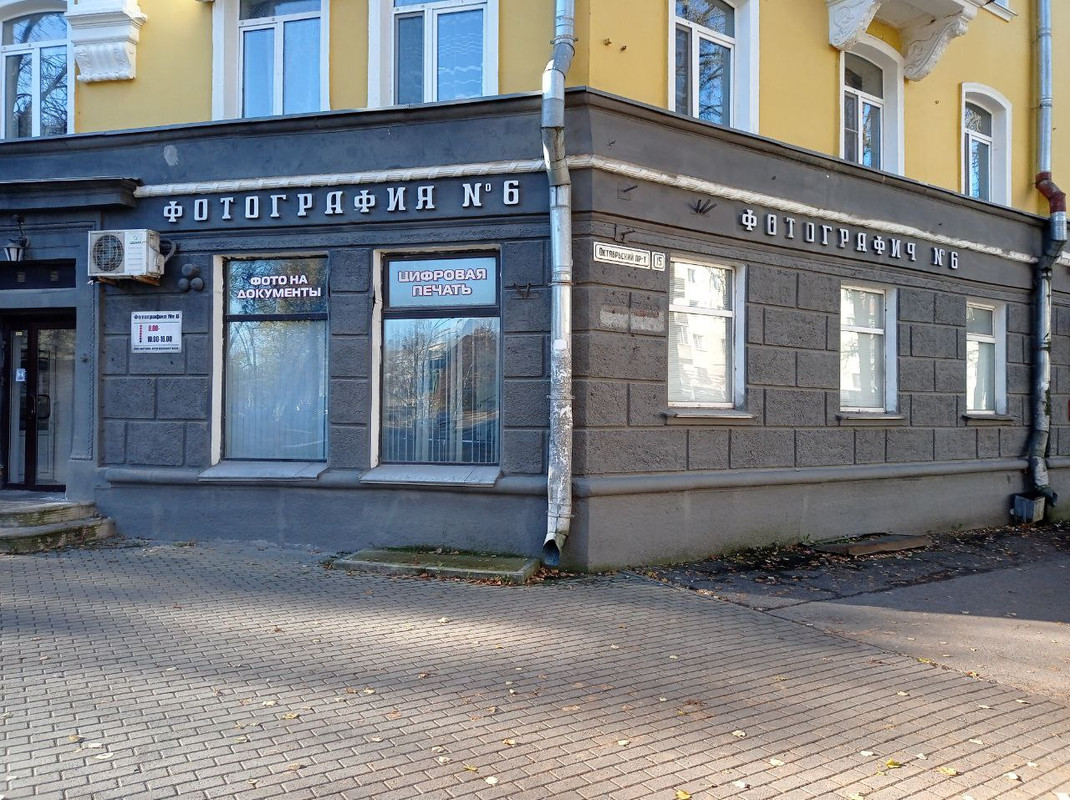
In USSR the infrastructures of cafeterias, houses, schools, were numbered, for instance Столовая № 4, баня №5, Школа №17, etc. This has vastly vanished but is seen sometimes. Photographic studios also. This one is in Pskov, on Oktyabrskaya avenue, I took the picture with the mobile phone late October, as a reminded to return take a picture with the large format camera I had with me, then I forgot, will try to remember next time there, February maybe. The name was kept on the wall, and the place is still a photographic shop, just that of course as it writes on the windows, digital and prints from digital:
 |
|
| Vissza az elejére |
|
 |
paulhofseth

Csatlakozott: 2011.03.05. Szombat 20:48
Hozzászólások: 620
Tartózkodási hely: Norway
Expire: 2018-06-28
|
Elküldve: Szomb. Jan. 10, 2026 11:33 am Hozzászólás témája: cheap cameras for the masses |
|
Elküldve: Szomb. Jan. 10, 2026 11:33 am Hozzászólás témája: cheap cameras for the masses |
|
|
paulhofseth wrote:
As I recall, mr. Thiele (the one with the exact production lists) wrote abook about the Zeiss Werra Camera where he outlines its genesis. As a response to the uprising and discontent the then party chief decreed that a reasonbly priced camera for the masses must be produced. Hence the Zeiss works in the remote Eisfeld by the river Werra was converted to a camera factory and the Zeiss engineers who came back the from captivity in the USSR had ideas about a new compact camera and got to build iit.
A very "Bauhaus" style elegance which was produced and sold to just about comply with the specified price.
Later refined to have rangefinder and interchangeable lenses (Cardinar and Flektogon) specially designed and produced for the behind the lens leaf shutter in Jena.
It is sometimes claimed that its olive green colour was related to millitary use, but it is the colour of the province, Thüringen. While it also came in black.The shutter was occcasionally bought from Zeiss west-owned Compur . The DDR Vebur shutter was made with 1/750 after a whille and th slower versions disappeared. The Werra was by no means a substandard product even while intended for a broad public.
Zeissikonveb.de has more info.
p.
p. |
|
| Vissza az elejére |
|
|
landstrykere
Csatlakozott: 2018.02.10. Szombat 23:20
Hozzászólások: 66
Tartózkodási hely: Norge
|
Elküldve: Szomb. Jan. 10, 2026 3:09 pm Hozzászólás témája: |
|
Elküldve: Szomb. Jan. 10, 2026 3:09 pm Hozzászólás témája: |
|
|
landstrykere wrote:
I forgot to mention in the medium format category, as popular export, the Lubitel. A page of mail order La Redoute in France in 1979, 159 fr, bundled with a selenium light meter 275 fr:

in same catalogue, a Zenit E (selenium with needle reading on top) + Industar-50, 395 fr, a Zenit TTL (CdS with needle in viewfinder) with Helios-44, 795 fr:

then up in price, a Praktica MTL3 at 1100 fr, a Japanese Petri MF-1 1190 fr both TTL and a fast lense (1.8 Pentacon, 1.7 Petri):

on this site, top down, online pdf of La Redoute printemps-été 1990, pages 1102-1105 the cameras. there for whatever reason no Japanese SLR, but Praktica BCA, BMS, BX20 and the Zenit 12XP:
https://sixties-seventies-eighties-vintage-musique.eu/catalogues-la-redoute-annees-60-70-80-90/
these were general mail orders centered around clothes, and had sections for home accessories, appliances, tools, leisure stuff (garden, camping, sport, hunting rifles, fishing, bicycles, etc) and all along the 70's and 80's a section with photographic stuff. They were thick catalogues in the thausend pages, with very wide distribution. La Redoute, 3 Suisses, and lesser, Blanche Porte and the french edition of Quelle.
then the specialized Photo-Quelle , Photo-Porst and these German companies were also rebranders:. "Revue" name and just "Porst"
everybody had some point-and-shoot at least, and there were the local photos labs and studios, with their big Agfa, Fuji, Kodak signs, that did also sell some cameras, often a Zenit and a Praktica on the shelves
so yes , quite popular cameras. |
|
| Vissza az elejére |
|
|
landstrykere
Csatlakozott: 2018.02.10. Szombat 23:20
Hozzászólások: 66
Tartózkodási hely: Norge
|
Elküldve: Vas. Jan. 11, 2026 7:42 pm Hozzászólás témája: |
|
Elküldve: Vas. Jan. 11, 2026 7:42 pm Hozzászólás témája: |
|
|
landstrykere wrote:
| hazedoesntfazeme írta: |
Is it correct to say that czj lenses while generally good they are often "flawed", like it's often said about the Helios 44?
I ask this because I remember when I was young, and I was interested in film photography, both zenites and prskticas were considered "trash", I remember even being told that they were not worth the cost of being fixed, and accordingly, their camera lenses got the same treatment. But this was more than 20 years ago, and now I see pancolars for 150 euros on ebay.
Thus my question better formulated, is it true that in a sober analysis, czj lenses will always have a flaw in comparison to c/y or Pentax lenses for example? |
of course not, CZJ lenses will not always have a flaw. I have some CZJ lenses in M42 and in Exakta mounts, some in P6 mount I used a lot on Kiev-6S bodies btw.
Many optical formulas were identical, some specifics like the Flektogon is Jena, Distagon is the similar retrofocus by Oberkochen. Otherwise difference Zeiss Oberkochen and Zeiss Jena is more research and implementation in coating in Oberkochen, resulting in the T* sophisticated multi-coating from the 70's.
coating plays a role in colour rendition, resistance to side light. Older lenses were meant for black white, and may behave bad depending light condition. For instance comparing a Japanese and a Soviet, I have the early 35mm f2 Takumar that produces lot of chromatic aberrations, and a newer Mir-24 35mm f2 that behaves very well. I can use the Takumar with black-white but for colour I will take the Mir.
the name differentiates the lens for export over Iron Curtain from the others. Because Zeiss Oberkochen, the name "Carl Zeiss" was forbidden West of the Curtain, in this case the name "aus Jena DDR" was used , for instance "Tessar aus Jena DDR".
Pancolar are very nice lenses, some single coated some multi-coated (the last all black). No idea what could be a reasonable price, there is a lot of silly prices on Ebay, Catawiki has less choice but sometime better prices. |
|
| Vissza az elejére |
|
|
stevemark

Csatlakozott: 2011.04.29. Péntek 18:40
Hozzászólások: 5511
Tartózkodási hely: Switzerland
|
Elküldve: Hétf. Jan. 12, 2026 2:41 am Hozzászólás témája: |
|
Elküldve: Hétf. Jan. 12, 2026 2:41 am Hozzászólás témája: |
|
|
stevemark wrote:
| landstrykere írta: |
of course not, CZJ lenses will not always have a flaw. ...
Many optical formulas were identical, some specifics like the Flektogon is Jena, Distagon is the similar retrofocus by Oberkochen. |
Some lenses - e. g. the CZJ Sonnar 3.5/135mm - are really good if you have a good sample.
Other lenses from Eastern Germany clearly are inferior to the corresponding western CY lenses; e. g. the Pentacon Auto 2.8/28mm, Pentacon Auto 2.8/135 and Pentacon 4/200 cannot compete with their CY counterparts (Zeiss Distagon 2.8/28, Sonnar 2.8/135 and Tele Tessar 4/200). Tested side by side ...
S
_________________
www.artaphot.ch |
|
| Vissza az elejére |
|
|
landstrykere
Csatlakozott: 2018.02.10. Szombat 23:20
Hozzászólások: 66
Tartózkodási hely: Norge
|
Elküldve: Hétf. Jan. 12, 2026 6:46 pm Hozzászólás témája: |
|
Elküldve: Hétf. Jan. 12, 2026 6:46 pm Hozzászólás témája: |
|
|
landstrykere wrote:
| stevemark írta: |
Some lenses - e. g. the CZJ Sonnar 3.5/135mm - are really good if you have a good sample.
Other lenses from Eastern Germany clearly are inferior to the corresponding western CY lenses; e. g. the Pentacon Auto 2.8/28mm, Pentacon Auto 2.8/135 and Pentacon 4/200 cannot compete with their CY counterparts (Zeiss Distagon 2.8/28, Sonnar 2.8/135 and Tele Tessar 4/200). Tested side by side ...
|
"western CY lenses" is funny, because they were manufactured in Japan, that is way far East than East Germany  Yes,
designed in Germany, yet not made there. To this day I think Zeiss still has its stuff manufactured in Japan.
jokes apart, the CY are T* lenses, the top of the top in lens technology, along Fuji ECB probably and similars, advanced multi-coatings, etc.
It doesn't mean that Jena lenses are bad. |
|
| Vissza az elejére |
|
|
kiddo
Csatlakozott: 2018.06.29. Péntek 22:38
Hozzászólások: 1630
|
Elküldve: Hétf. Jan. 12, 2026 7:31 pm Hozzászólás témája: |
|
Elküldve: Hétf. Jan. 12, 2026 7:31 pm Hozzászólás témája: |
|
|
kiddo wrote:
| landstrykere írta: |
| stevemark írta: |
Some lenses - e. g. the CZJ Sonnar 3.5/135mm - are really good if you have a good sample.
Other lenses from Eastern Germany clearly are inferior to the corresponding western CY lenses; e. g. the Pentacon Auto 2.8/28mm, Pentacon Auto 2.8/135 and Pentacon 4/200 cannot compete with their CY counterparts (Zeiss Distagon 2.8/28, Sonnar 2.8/135 and Tele Tessar 4/200). Tested side by side ...
|
"western CY lenses" is funny, because they were manufactured in Japan, that is way far East than East Germany Yes,
designed in Germany, yet not made there. To this day I think Zeiss still has its stuff manufactured in Japan.
jokes apart, the CY are T* lenses, the top of the top in lens technology, along Fuji ECB probably and similars, advanced multi-coatings, etc.
It doesn't mean that Jena lenses are bad. |
I have never seen a japanese c/y Zeiss , I have/had 24mm,/28mm/35mm/50mm 1.4 and 135mm all Western Germany made written on them, there might be some Japanese versions also, but I never had one
Otoh I only have the Flek 2.4 that's very close in results as distagon 2.8, it's the only east Germany Zeiss I keep , I had 29mm,50mm and 200mm all very weak comparing with Ca/Ni/Mi/Topcor etc
A hozzászólás legutóbb kiddo által Hétf. Jan. 12, 2026 11:56 pm-kor lett szerkesztve, összesen 1 alkalommal. |
|
| Vissza az elejére |
|
|
stevemark
Csatlakozott: 2011.04.29. Péntek 18:40
Hozzászólások: 5511
Tartózkodási hely: Switzerland
|
Elküldve: Hétf. Jan. 12, 2026 9:32 pm Hozzászólás témája: |
|
Elküldve: Hétf. Jan. 12, 2026 9:32 pm Hozzászólás témája: |
|
|
stevemark wrote:
| landstrykere írta: |
It doesn't mean that Jena lenses are bad. |
Certainly not. I don't have many "DDR" lenses - a few Pancolars 2/50, the Meyer/Pentacon 1.8/50, an early postwar Sonnar 2.8/180, an early postwar Biotar 1.5/75, a few Biotars 2/58 (also from the 1950s), plus the mentioned M42 lenses from the 1960/1970s.
I really like the Pancolar 2/50 due to its "softness" wide open and its excellent (CA free!) rendition at f8 and f11, and I also like the Sonnar 2.8/180mm as well as the Sonnar 3.5/135mm. These lenses are well respected for their special rendition and image quality.
I am sure you can make excellent images also with a Pentacon 2.8/28, 2.8/135 or 2.8/135mm lens - but if you want a "high res" vintage lens for landscapes, there are better options available.
S
_________________
www.artaphot.ch |
|
| Vissza az elejére |
|
|
landstrykere
Csatlakozott: 2018.02.10. Szombat 23:20
Hozzászólások: 66
Tartózkodási hely: Norge
|
Elküldve: Szer. Jan. 14, 2026 2:55 pm Hozzászólás témája: |
|
Elküldve: Szer. Jan. 14, 2026 2:55 pm Hozzászólás témája: |
|
|
landstrykere wrote:
| kiddo írta: |
I have never seen a japanese c/y Zeiss , I have/had 24mm,/28mm/35mm/50mm 1.4 and 135mm all Western Germany made written on them, there might be some Japanese versions also, but I never had one
|
all C/Y lenses I had in the hands, or saw at sales, where "Made in Japan" marked. "Made in Germany" the for Hasselblad and these of course in Compur shutter, Germany too. |
|
| Vissza az elejére |
|
|
landstrykere
Csatlakozott: 2018.02.10. Szombat 23:20
Hozzászólások: 66
Tartózkodási hely: Norge
|
Elküldve: Szer. Jan. 14, 2026 7:49 pm Hozzászólás témája: |
|
Elküldve: Szer. Jan. 14, 2026 7:49 pm Hozzászólás témája: |
|
|
landstrykere wrote:
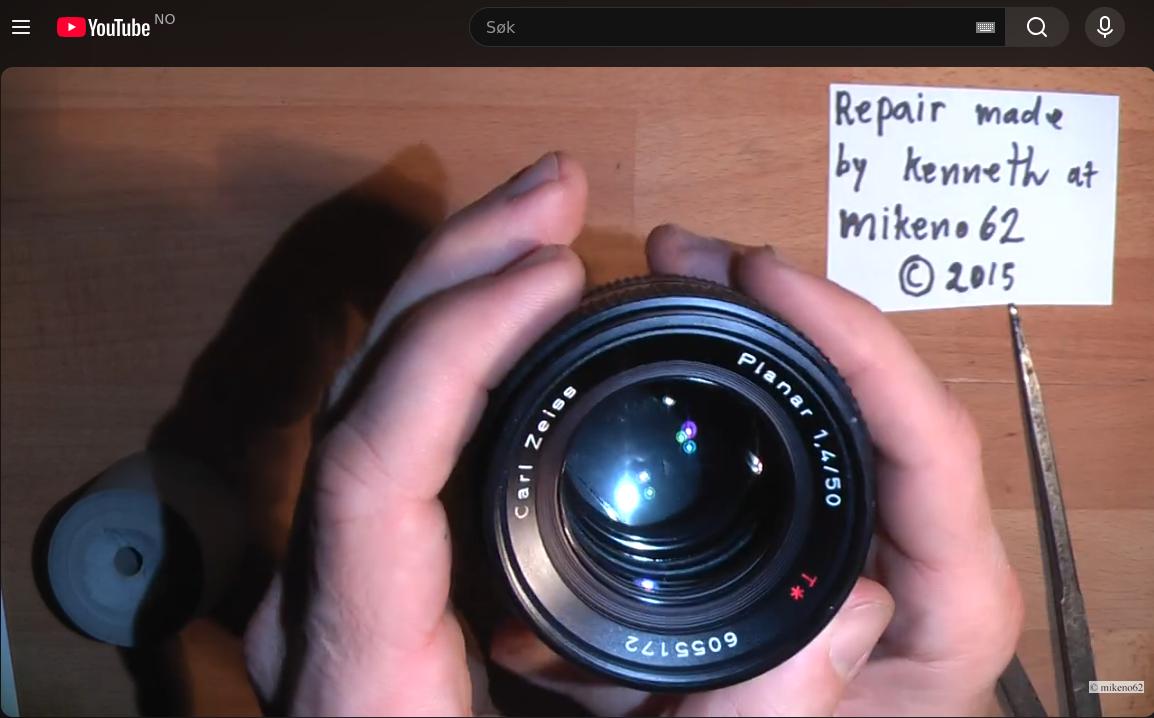
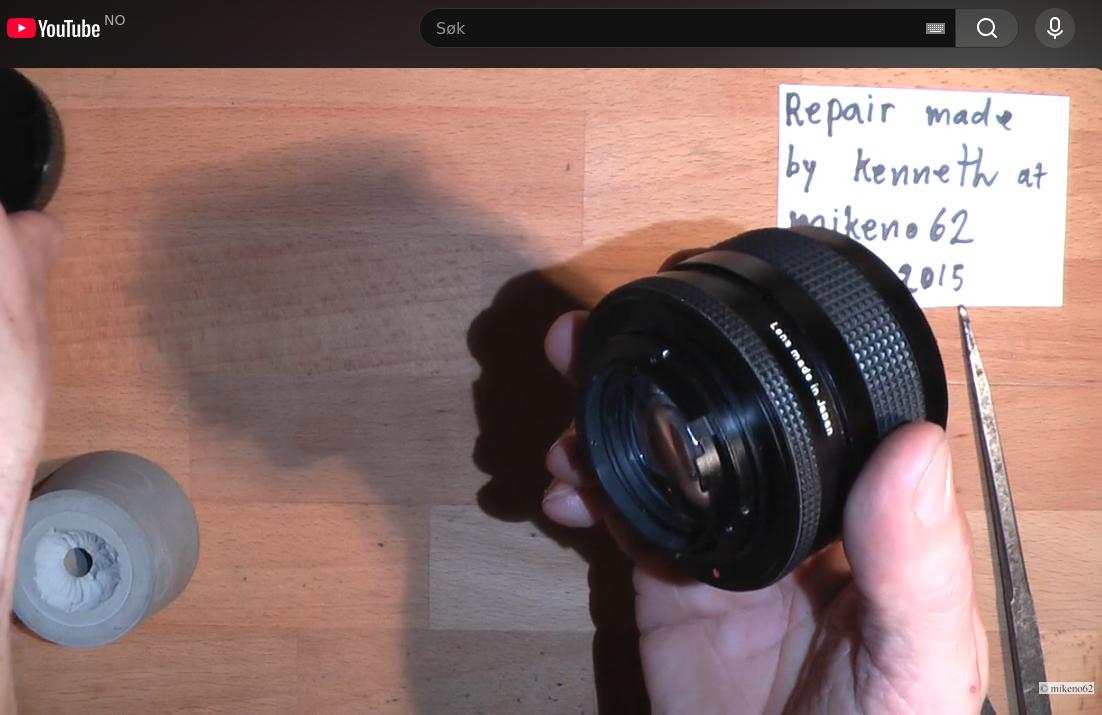
this 10 years old Youtube video by "mikeno62", fixing oil on blades of a C/Y Planar T* 50mm f1.4. "Lens made in Japan":
https://www.youtube.com/watch?v=GQot-U3YPio
 |
|
| Vissza az elejére |
|
|
BrianSVP

Csatlakozott: 2023.06.09. Péntek 20:18
Hozzászólások: 664
Tartózkodási hely: Philadelphia
|
Elküldve: Szer. Jan. 14, 2026 9:00 pm Hozzászólás témája: |
|
Elküldve: Szer. Jan. 14, 2026 9:00 pm Hozzászólás témája: |
|
|
BrianSVP wrote:
Who cares? Everyone except apparently you already knows th C/Y lenses were made both in Germany by Zeiss and in Japan by Yashica.
Google "Zeiss MM AE G J" and educate yourself.
|
|
| Vissza az elejére |
|
|
kiddo
Csatlakozott: 2018.06.29. Péntek 22:38
Hozzászólások: 1630
|
Elküldve: Szer. Jan. 14, 2026 10:33 pm Hozzászólás témája: |
|
Elküldve: Szer. Jan. 14, 2026 10:33 pm Hozzászólás témája: |
|
|
kiddo wrote:
i forgot about the zeiss 80-200mm f4 i have , this indeed has been made in Japan, most of the others made in Germany i guess they have the ninja star shape of the iris (I'm not sure if All ninja star shaped iris were made in Germany), besides, the MM versions have the green painted f22 (not sure if All japanese versions have same green f22)
I never had issues with Zeiss c/y lenses (except a little play on a 28mm f2.8 pretty worn one,but good results) so I'm not sure the quality changed from Germany to Japan, I cannot notice anything from outside, I did read that the 28mm f2.8 might be a cheaper made one comparing it with others. I guess overall quality is topnotch on these lenses , as one might expect.from Zeiss T (I have a 75mm f2.8 trioplan T coating made in 30's I guess ,from the folding Balda and is just like new, smooth focusing,no wobbly, but coatings definitely inferior to newer lenses , so T coatings have improved over the years ). |
|
| Vissza az elejére |
|
|
Gerald
Csatlakozott: 2014.03.25. Kedd 18:47
Hozzászólások: 1292
Tartózkodási hely: Brazil
|
Elküldve: Kedd. Márc. 10, 2026 12:07 am Hozzászólás témája: |
|
Elküldve: Kedd. Márc. 10, 2026 12:07 am Hozzászólás témája: |
|
|
Gerald wrote:
The OP raised several questions about Carl Zeiss Jena as a company, however, his goal was simply to find out if the specific lens he bought was good or not.
I think the OP's approach was flawed. Instead of asking for vague opinions about the lens manufacturer of a second-hand lens he bought, he should learn how to properly test a lens with a minimum of scientific care. The test would provide more objective information on whether the specific lens was of original factory quality, or if it was a lemon or a lens ruined by inept maintenance, etc.
Nevertheless, the questions raised by the OP are interesting from a historical-economic-technological point of view. Just for fun, I asked Google AI the first question:
"Zeiss Jena lenses during the cold war were considered premium or professional in iron curtain countries?"
The answer:
"Yes, Carl Zeiss Jena lenses (DDR) produced during the Cold War were considered top-tier, professional-grade optics within the Iron Curtain countries and the Eastern Bloc. As the primary supplier of optical equipment for the Warsaw Pact, they were renowned for their high-quality, sharp imaging, and robust build."
"Despite the economic challenges of East Germany, Zeiss Jena maintained a reputation for producing some of the best, most sought-after lenses, often used by professionals."
Well, that's Google AI's answer, not mine, but I'd like to add that Carl Zeiss Jena lenses have aged surprisingly well. Several CZJ lenses cost now more than the corresponding lenses from other famous manufacturers that cost, 50 years ago, two or three times more than the CZJ lenses.
I note that the same thing happened with the M42 mount used in CZJ and Pentacon lenses. At the time, the M42 mount was despised and abandoned by the most prestigious manufacturers, but today the M42 mount is highly valued for its robustness, simplicity, and especially its ease of adaptation to modern mirrorless cameras.
_________________
If raindrops were perfect lenses, the rainbow did not exist. |
|
| Vissza az elejére |
|
|
hazedoesntfazeme
Csatlakozott: 2025.08.29. Péntek 11:39
Hozzászólások: 62
|
Elküldve: Szer. Márc. 11, 2026 3:11 pm Hozzászólás témája: |
|
Elküldve: Szer. Márc. 11, 2026 3:11 pm Hozzászólás témája: |
|
|
hazedoesntfazeme wrote:
| Gerald írta: |
The OP raised several questions about Carl Zeiss Jena as a company, however, his goal was simply to find out if the specific lens he bought was good or not.
(...)
I note that the same thing happened with the M42 mount used in CZJ and Pentacon lenses. At the time, the M42 mount was despised and abandoned by the most prestigious manufacturers, but today the M42 mount is highly valued for its robustness, simplicity, and especially its ease of adaptation to modern mirrorless cameras. |
Not at all, my questions here are unrelated to the other thread I made asking about the CZJ Sonnar 200mm f2.8.
My questions are prompted by how bizarre is the story of Zeiss Jena and by the fact that when I see promotional and retail material of cameras from the 60s, 70s, and 80s, it seems that Praktica cameras (and consequently Zeiss Jena lenses) were sold extremely cheap in comparison to Nikon, Canon, Olympus and Petri. One would assume like you said that the M42 was then considered an amateur or budget option vs a professional Nikon F. Yet for me it is undeniable that a Zeiss Jena lens in a good condition, specially from the MC black lens body era and specially certain lines, performs at the level of a high quality lens of the period. Lenses like the sonnars, the pancolar, the flektogon... And even by the GDR photographers themselves Zeiss Jena lenses don't seem to have a good image. In Poland, in Russia and other iron curtain societies it seems that Zeiss Jena were seen as premium or professional.
[img] [/img]
In this photo of Sibylle Bergemann she is holding a Nikon.
And this leads to another curiosity of mine, how exactly Zeiss Jena positioned itself in the photography and optics industry of the period, if they themselves had this perception or not, or if during these decades they were producing as per government quantity mandates, and were trying to earn hard cash currency for their isolates socialist society. Did Zeiss Jena saw the camera lenses business just as a side thing while they focused on military projects and microchips? Why they never offered a "professional line" beyond p6 lenses? Why they didn't produce lenses for other mounts beyond m42, p6, exackta and praktina? If for them to produce a camera was complicated, as it seems to have happened with the werra, and with the struggles that the east german camera industry had in producing the eletronic prakticas, why they didn't produce lenses for other mounts for japanese cameras? If the SLR sales were being crushed by the introduction of compact cameras, why they didn't start to shift lenses production to a more specialized, expensive, professional market? |
|
| Vissza az elejére |
|
|
Gerald
Csatlakozott: 2014.03.25. Kedd 18:47
Hozzászólások: 1292
Tartózkodási hely: Brazil
|
Elküldve: Csüt. Márc. 12, 2026 2:14 pm Hozzászólás témája: |
|
Elküldve: Csüt. Márc. 12, 2026 2:14 pm Hozzászólás témája: |
|
|
Gerald wrote:
| hazedoesntfazeme írta: |
And even by the GDR photographers themselves Zeiss Jena lenses don't seem to have a good image.
|
Where did you get that conclusion from? From the photo below?
What I see is a professional German photographer holding a Japanese camera. Following your logic, would this mean that German lenses (Zeiss Oberkochen, Leica, Schneider, Rollei, etc.) "don't seem to have a good image," too?
In my opinion, the only correct conclusion we can draw is that Nikon had become, from the 1960s onwards, the dominant force in professional 35mm photography. In other words, the photo above tells more about the strength of Nikon than about any lack of quality of Carl Zeiss Jena lenses and other German lens manufacturers.
| hazedoesntfazeme írta: |
Why Zeiss Jena "never offered a "professional line" beyond p6 lenses?"
|
That depends on what you call a "professional line" of lenses. Obviously, Carl Zeiss Jena didn't have as extensive a lens line as Nikon, because CZJ wasn't targeting the global professional market. CZJ produced lenses only for cameras manufactured in East Germany. The estimated number of professional photographers in East Germany was between 5,000 and 10,000, a relatively small number that wouldn't justify the cost of developing lenses specifically for professional use.
| hazedoesntfazeme írta: |
Why they didn't produce lenses for other mounts beyond m42, p6, exackta and praktina?
|
As I said above, CZJ produced lenses only for East Germany cameras.
| hazedoesntfazeme írta: |
why they(CZJ) didn't produce lenses for other mounts for japanese cameras?
|
Nikon, Canon, etc., used proprietary lens mounts precisely to prevent or hinder other lens manufacturers from producing compatible lenses. Remember that CZJ was a state-owned company in a communist country, meaning it was on the "wrong side of the wall." The chance of CZJ producing lenses under license from Nikon was nil. CZJ couldn't even use the names Sonnar, Biometar, etc., in most Western countries!
| hazedoesntfazeme írta: |
...Zeiss Jena lenses were sold extremely cheap in comparison to Nikon, Canon, Olympus and Petri
|
No, CZJ lenses weren't "extremely cheap." I paid $200 for my CZJ Flektogon 20mm F2.8 in New York in 1985, which would correspond to about $600 today. "Extremely cheap"? I don't think so.
To be fair, a Leica Super Angulon R 21mm F4 cost 4 times more than a Flektogon 20mm F2.8. Today, on the secondhand market, both lenses have comparable prices, ranging from $500 to $1000.
_________________
If raindrops were perfect lenses, the rainbow did not exist. |
|
| Vissza az elejére |
|
|
Gerald
Csatlakozott: 2014.03.25. Kedd 18:47
Hozzászólások: 1292
Tartózkodási hely: Brazil
|
Elküldve: Szomb. Márc. 21, 2026 9:10 pm Hozzászólás témája: |
|
Elküldve: Szomb. Márc. 21, 2026 9:10 pm Hozzászólás témája: |
|
|
Gerald wrote:
Just a follow-up of my previous comments on how the prices of Carl Zeiss Jena lenses have held up well over time.
Compare, for example, what happened to certain lenses from well-known brands that were a sensation when new. A Vivitar Series 1 24-48mm F3.8 cost £336 in 1979 (source: Amateur Photography), a value that adjusted for inflation would be $2239 today. However, the actual market price for good condition copies is only $60-$100. In contrast, a Carl Zeiss Jena Pancolar 80mm F1.8 lens, which cost £89 when new in 1979, is sold secondhand on eBay for over $1000 today!
Another interesting example, at least for me, is the Minolta MD 400mm F5.6, which was a lens that promised exceptional performance due to the use of a fluorite element for virtual elimination of chromatic aberration. The price reflected the expected performance: £1138 in 1979, corresponding to $7543 today! Certainly, the original high price explains why this lens is relatively rare today. Nonetheless, on eBay one can buy the Minolta MD 400mm F5.6 for $300-$400, that is, less than 10% of the original adjusted price. This example also shows that scarcity is not necessarily a factor in making a used lens to be expensive.
_________________
If raindrops were perfect lenses, the rainbow did not exist. |
|
| Vissza az elejére |
|
|
kiddo
Csatlakozott: 2018.06.29. Péntek 22:38
Hozzászólások: 1630
|
Elküldve: Szomb. Márc. 21, 2026 10:21 pm Hozzászólás témája: |
|
Elküldve: Szomb. Márc. 21, 2026 10:21 pm Hozzászólás témája: |
|
|
kiddo wrote:
| Gerald írta: |
Just a follow-up of my previous comments on how the prices of Carl Zeiss Jena lenses have held up well over time.
Compare, for example, what happened to certain lenses from well-known brands that were a sensation when new. A Vivitar Series 1 24-48mm F3.8 cost £336 in 1979 (source: Amateur Photography), a value that adjusted for inflation would be $2239 today. However, the actual market price for good condition copies is only $60-$100. In contrast, a Carl Zeiss Jena Pancolar 80mm F1.8 lens, which cost £89 when new in 1979, is sold secondhand on eBay for over $1000 today!
Another interesting example, at least for me, is the Minolta MD 400mm F5.6, which was a lens that promised exceptional performance due to the use of a fluorite element for virtual elimination of chromatic aberration. The price reflected the expected performance: £1138 in 1979, corresponding to $7543 today! Certainly, the original high price explains why this lens is relatively rare today. Nonetheless, on eBay one can buy the Minolta MD 400mm F5.6 for $300-$400, that is, less than 10% of the original adjusted price. This example also shows that scarcity is not necessarily a factor in making a used lens to be expensive. |
Pancolar lens was too cheap for its time , that might have to do with 2 things : 1.I guess it was made in East Germany , supposedly the poor side of the actual Germany, so the customer would have limited budget in spending compared to west germany 2. The state would help keep prices low ,as most of the companies,if not all, would belong to the state itself (it happened in most comunist countries) , so the real cost it wouldn't be the retail price (I guess, many countries do this nowadays also, helping their own companies expand all over the world?) |
|
| Vissza az elejére |
|
|
Gerald
Csatlakozott: 2014.03.25. Kedd 18:47
Hozzászólások: 1292
Tartózkodási hely: Brazil
|
Elküldve: Szer. Márc. 25, 2026 1:32 pm Hozzászólás témája: |
|
Elküldve: Szer. Márc. 25, 2026 1:32 pm Hozzászólás témája: |
|
|
Gerald wrote:
| kiddo írta: |
Pancolar lens was too cheap for its time , that might have to do with 2 things : 1.I guess it was made in East Germany , supposedly the poor side of the actual Germany, so the customer would have limited budget in spending compared to west germany 2. The state would help keep prices low ,as most of the companies,if not all, would belong to the state itself (it happened in most comunist countries) , so the real cost it wouldn't be the retail price (I guess, many countries do this nowadays also, helping their own companies expand all over the world?) |
The £89 price of the CZJ Pancolar 80mm F1.8 that I mentioned earlier was for the UK, i.e., the "free" market price! This price had nothing to do with the Pancolar price set by the communist government for the public of the former GDR.
Yes, a Pancolar 85mm F1.8 was RELATIVELY cheap compared to other equivalent lenses on the UK market, but it definitely wasn't "too cheap", as it seems to be a common belief nowadays.
The table below shows the prices of portrait lenses equivlente to the Pancolar 80mm F1.8 in the UK in 1979:
Zeiss Pancolar .. 80mm F1.8 ....... £89
---------------------------------------------
Jupiter 9A ........ 85mm F2.0........ £40
Hexanon .......... 85mm F1.8 ....... £90
Nikkor.............. 85mm F2.0 ...... £177
Rokkor ............ 85mm F1.7 ...... £177
Canon FD ........ 85mm F1.8 ...... £199
Zuiko .............. 85mm F2.0 ...... £218
Zeiss Planar ..... 85mm F1.4 ...... £251 <--
Summicron-R ... 90mm F2.0 ...... £252
An interesting case is the Planar 85mm F1.4, made by the prestigious Zeiss Oberkochen West Germany. The Planar was considerably faster and more expensive than the Pancolar 80mm F1.8.
In 1979, the market price of the Planar was almost 3 times the price of the Pancolar, but today a Planar can be bought on eBay for $300-$400, while a Pancolar costs around $1000! Interesting, isn't it?
_________________
If raindrops were perfect lenses, the rainbow did not exist. |
|
| Vissza az elejére |
|
|
y

Csatlakozott: 2013.08.11. Vasárnap 18:01
Hozzászólások: 338
Tartózkodási hely: EU
|
Elküldve: Szer. Márc. 25, 2026 4:12 pm Hozzászólás témája: |
|
Elküldve: Szer. Márc. 25, 2026 4:12 pm Hozzászólás témája: |
|
|
y wrote:
| Gerald írta: |
| today a Planar can be bought on eBay for $300-$400, while a Pancolar costs around $1000! Interesting, isn't it? |
At a local EU online store I can see a minty Pancolar, with a case and some filters included, for $650. Beaters surely go even lower than that... |
|
| Vissza az elejére |
|
|
stevemark
Csatlakozott: 2011.04.29. Péntek 18:40
Hozzászólások: 5511
Tartózkodási hely: Switzerland
|
Elküldve: Szer. Márc. 25, 2026 7:43 pm Hozzászólás témája: |
|
Elküldve: Szer. Márc. 25, 2026 7:43 pm Hozzászólás témája: |
|
|
stevemark wrote:
| Gerald írta: |
In 1979, the market price of the Planar was almost 3 times the price of the Pancolar, but today a Planar can be bought on eBay for $300-$400, while a Pancolar costs around $1000! Interesting, isn't it? |
As far as I remember - correct me if I'm wrong! - about 30'000-40'000 Planar 1.4/85 were made, as well as about 15'000 Pancolar 1.8/80mm. While many (most) of the Planars will have survived, many of the less expensive and less "extraordinary" looking Pancolars may have been lost. Plus quite a few Asian (Chinese) collectors seem to really like anything from Eastern Germany.
S
_________________
www.artaphot.ch |
|
| Vissza az elejére |
|
|
Noritar
Csatlakozott: 2024.07.25. Csütörtök 3:47
Hozzászólások: 91
|
Elküldve: Csüt. Márc. 26, 2026 4:24 am Hozzászólás témája: |
|
Elküldve: Csüt. Márc. 26, 2026 4:24 am Hozzászólás témája: |
|
|
Noritar wrote:
| stevemark írta: |
| Gerald írta: |
In 1979, the market price of the Planar was almost 3 times the price of the Pancolar, but today a Planar can be bought on eBay for $300-$400, while a Pancolar costs around $1000! Interesting, isn't it? |
As far as I remember - correct me if I'm wrong! - about 30'000-40'000 Planar 1.4/85 were made, as well as about 15'000 Pancolar 1.8/80mm. While many (most) of the Planars will have survived, many of the less expensive and less "extraordinary" looking Pancolars may have been lost. Plus quite a few Asian (Chinese) collectors seem to really like anything from Eastern Germany.
S |
Relative scarcity explains most of the price difference. Add to that the Contax Planar is more common in the markets where the Pancolar is more rare. There is also the CZJ mystique.
I have always wanted the Pancolar 80. But in a world where the Pancolar sells for the same price as the Topcor... I buy the Topcor.
A hozzászólás legutóbb Noritar által Pént. Ápr. 10, 2026 8:16 pm-kor lett szerkesztve, összesen 1 alkalommal. |
|
| Vissza az elejére |
|
|
Noritar
Csatlakozott: 2024.07.25. Csütörtök 3:47
Hozzászólások: 91
|
Elküldve: Csüt. Márc. 26, 2026 5:34 am Hozzászólás témája: |
|
Elküldve: Csüt. Márc. 26, 2026 5:34 am Hozzászólás témája: |
|
|
Noritar wrote:
| stevemark írta: |
| Gerald írta: |
In 1979, the market price of the Planar was almost 3 times the price of the Pancolar, but today a Planar can be bought on eBay for $300-$400, while a Pancolar costs around $1000! Interesting, isn't it? |
As far as I remember - correct me if I'm wrong! - about 30'000-40'000 Planar 1.4/85 were made, as well as about 15'000 Pancolar 1.8/80mm. While many (most) of the Planars will have survived, many of the less expensive and less "extraordinary" looking Pancolars may have been lost. Plus quite a few Asian (Chinese) collectors seem to really like anything from Eastern Germany.
S |
Relative scarcity explains most of the price difference. Add to that the Contax Planar is more common in the markets where the Pancolor is more rare. There is also the CZJ mystique.
I have always wanted the Pancolor 80. But in a world where the Pancolor sells for the same price as the Topcor... I buy the Topcor. |
|
| Vissza az elejére |
|
|
Gerald
Csatlakozott: 2014.03.25. Kedd 18:47
Hozzászólások: 1292
Tartózkodási hely: Brazil
|
Elküldve: Pént. Márc. 27, 2026 5:21 pm Hozzászólás témája: |
|
Elküldve: Pént. Márc. 27, 2026 5:21 pm Hozzászólás témája: |
|
|
Gerald wrote:
| y írta: |
| Gerald írta: |
| today a Planar can be bought on eBay for $300-$400, while a Pancolar costs around $1000! Interesting, isn't it? |
At a local EU online store I can see a minty Pancolar, with a case and some filters included, for $650. Beaters surely go even lower than that... |
Certainly, prices can vary greatly depending on the market or the seller. Therefore, I think the correct way to assess the relative value of lenses is by using a common marketplace, so I can't think of anything better than eBay. My point is that Zeiss Jena lenses have appreciated surprisingly in value, compared, for example, to Zeiss Oberkochen lenses.
From eBay two days ago:

[/img]

Conclusion: Today, you can buy a Zeiss Planar 85mm F1.4 in excellent condition for 1/4 the price of a Zeiss Jena Pancolar 80mm F1.8, even though the Planar cost 3 times as much as the Pancolar when both lenses were new.
_________________
If raindrops were perfect lenses, the rainbow did not exist. |
|
| Vissza az elejére |
|
|
Gerald
Csatlakozott: 2014.03.25. Kedd 18:47
Hozzászólások: 1292
Tartózkodási hely: Brazil
|
Elküldve: Szomb. Márc. 28, 2026 8:13 pm Hozzászólás témája: |
|
Elküldve: Szomb. Márc. 28, 2026 8:13 pm Hozzászólás témája: |
|
|
Gerald wrote:
| stevemark írta: |
As far as I remember - correct me if I'm wrong! - about 30'000-40'000 Planar 1.4/85 were made, as well as about 15'000 Pancolar 1.8/80mm.
S |
Regarding Zeiss Pancolar, your figure matches that on the zeissikonveb.de website. I found no information about Zeiss Planar production numbers, but I have no reason to doubt your figure.
The most important, I don't think the number of lenses produced (or still in use) is a good predictor for the market price of used lenses. The reason is that you shouldn't just look at supply; you should also look at demand.
Looking at the current market situation, the only thing we can say for sure is that there is a significant number of people willing to pay $1000 for a Zeiss Pancolar.
Just to confirm that the numbers of lenses produced isn't in itself a good indicator of the market price, it's possible to buy a Zeiss Planar 85mm F2 for Contarex for just over half the price of a Pancolar 80mm F1.8, although only 7000 copies of the Planar 85mm F2 were produced, that is, less than half the number of Pancolar lenses. Consider also that the Planar is older than the Pancolar, meaning it's more "collectible." Even so, the Pancolar is more expensive today.
Another example is the Minolta APO MD 400mm F5.6 lens, a milestone in super-telephoto lens design. As you know, this lens uses a fluorite element, which made its price in 1978 to be equivalent to over $7,000 today. No surprise that only an estimated 700 units were built.
The Minolta APO MD 400mm F5.6A is a perfect lens to cost a fortune today, right? Well, today you can find a Minolta MD 400mm f5.6 APO on eBay for less than $500, that is, less than half the price of a Zeiss Pancolar 80mm F1.8!
https://www.ebay.com/itm/406783306447
| stevemark írta: |
While many (most) of the Planars will have survived, many of the less expensive and less "extraordinary" looking Pancolars may have been lost.
S |
Why do you think that? I believe it's not possible to know with reasonable accuracy what is the number of surviving Planar and Pancolar lenses. By the way, these lenses are all-metal and so well-constructed that only mistreatment and neglect can ruin them.
| stevemark írta: |
Plus quite a few Asian (Chinese) collectors seem to really like anything from Eastern Germany.
S |
Do you have any evidence that Zeiss Jena lenses have increased in value due to strong interest from Chinese buyers?
I suspect the continued appreciation of Zeiss Jena lenses is due not to some fad, but to less obvious reasons. A reason for Carl Zeiss lenses were relatively cheap when new is that Carl Zeiss Jena, and Meyer/Pentacon alike, suffered "canceling" or a veiled boycott from the Western photographic world. That was Cold War era!
I remember, many photography magazines turned their noses up at products "Made in GDR". For them, Zeiss Oberkochen was the "real" Zeiss 
Poor Zeiss Jena could sell products in Western market only if prices were more or less the same as Vivitar, Soligor, Tokina, and other independent manufacturers.
I won't elaborate further on the reasons for the continued appreciation of Carl Zeiss Jena lenses, but I can't help but note a parallel with Sergio Leone's film The Good, the Bad and the Ugly! 
The Good, the Bad and the Ugly (1966) "was initially dismissed by many critics for its violence, moral ambiguity, and stylistic departures from traditional Hollywood Westerns." Charles Champlin of the Los Angeles Times even wrote that the "temptation is hereby proved irresistible to call The Good, The Bad and the Ugly, now playing citywide, The Bad, The Dull, and the Interminable, only because it is." 
Well, in the end, The Good, the Bad and the Ugly "evolved from a mixed-reception Spaghetti Western into a massive cult classic before ultimately being recognized as a masterpiece and one of the most influential films of all time". 
_________________
If raindrops were perfect lenses, the rainbow did not exist. |
|
| Vissza az elejére |
|
|
stevemark
Csatlakozott: 2011.04.29. Péntek 18:40
Hozzászólások: 5511
Tartózkodási hely: Switzerland
|
Elküldve: Vas. Márc. 29, 2026 1:38 am Hozzászólás témája: |
|
Elküldve: Vas. Márc. 29, 2026 1:38 am Hozzászólás témája: |
|
|
stevemark wrote:
[quote="Gerald"]
| stevemark írta: |
The reason is that you shouldn't just look at supply; you should also look at demand.
Looking at the current market situation, the only thing we can say for sure is that there is a significant number of people willing to pay $1000 for a Zeiss Pancolar.
|
Well, not too many people are actually willing to pay $1000 for a Zeiss Pancolar: Exactly two buyers in the entire three months of 2026 on ebay ...
Compare that to the Planar 1.4/85mm: Four samples sold in one day (Mar 26th, the latest date available on ebay).
Well, well ...
_________________
www.artaphot.ch |
|
| Vissza az elejére |
|
|
|
|
 Magyar
 Español
 中文
 Русский
 Deutsch
 日本語
 Français



