| Előző téma megtekintése :: Következő téma megtekintése |
| Szerző |
Üzenet |
LittleAlex 


Csatlakozott: 2008.11.27. Csütörtök 0:13
Hozzászólások: 2085
Tartózkodási hely: L'vov (Western Ukraine)
|
 Elküldve: Pént. Szept. 06, 2024 7:30 pm Hozzászólás témája: Carl Zeiss Jena Flektogon 50mm F4 Pentacon Six |
|
Elküldve: Pént. Szept. 06, 2024 7:30 pm Hozzászólás témája: Carl Zeiss Jena Flektogon 50mm F4 Pentacon Six |
|
|
LittleAlex wrote:
From 90-th I own Carl Zeiss Jena Flektogon 50mm F4 Pentacon Six Medium Format Lens. Which was produced in the year 1974 (zebra). I used it long ago on the film Kievs cameras. After I obtained Medium Format digital camera I gave to that lens the new use.
Recently I obtained MC version ($120, but not in the best condition, however the optic part is good, and the diaphragm also works fine (but it was hardy used and unprofessionally serviced - is completely absent lever for the diaphragm repetition)). The serial number is for digits, and I am not able to clarify the year of production. I decided to compare them both in the test. To my surprise, the oldest showed little better sharpness, saturation and eve contrast! There are test samples:
Phase One 645 DF+ P25 back
Zebra lens:
f/4.0
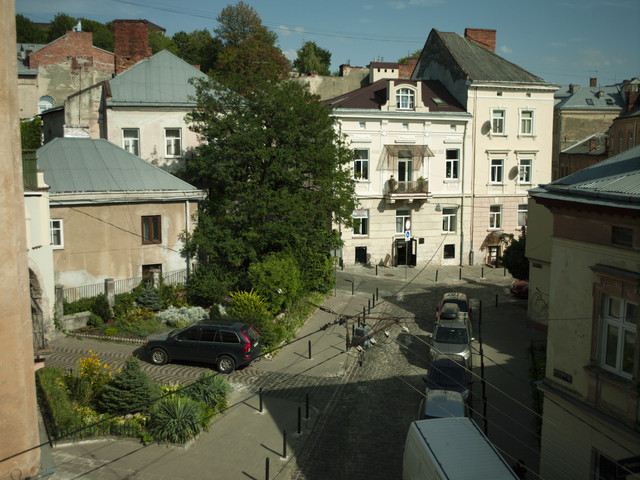
f/8.0

MC version lens:
f/4.0
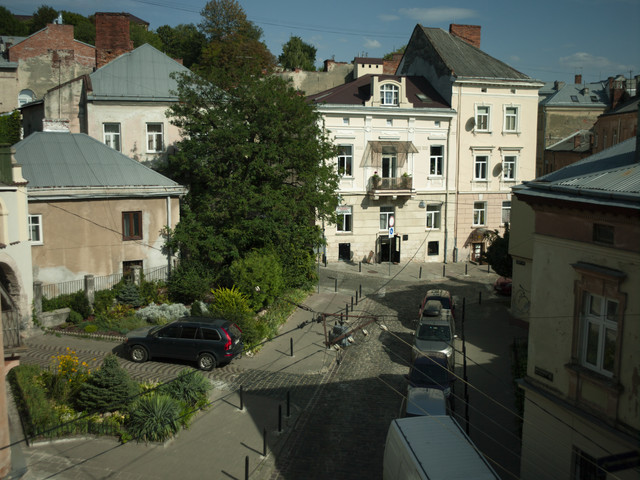
f/8.0
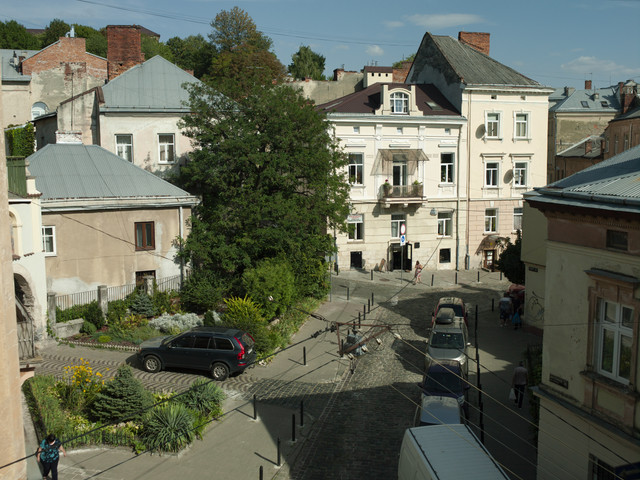
There is MC file with f/8.0 after it was hardly corrected in the Photoshop

_________________
"Sharpness is a bourgeois concept" - © H. Cartier Bresson
A hozzászólás legutóbb LittleAlex által Pént. Szept. 06, 2024 8:40 pm-kor lett szerkesztve, összesen 3 alkalommal. |
|
| Vissza az elejére |
|
 |
LittleAlex
Csatlakozott: 2008.11.27. Csütörtök 0:13
Hozzászólások: 2085
Tartózkodási hely: L'vov (Western Ukraine)
|
Elküldve: Pént. Szept. 06, 2024 7:43 pm Hozzászólás témája: |
|
Elküldve: Pént. Szept. 06, 2024 7:43 pm Hozzászólás témája: |
|
|
LittleAlex wrote:
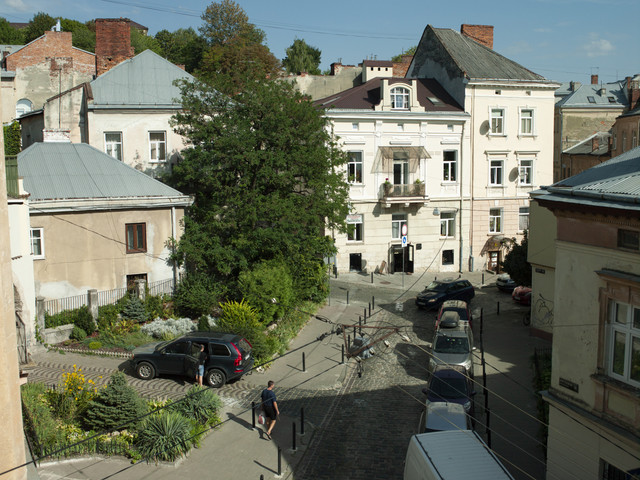
I decided also to compare Flektogon with Mamiya 55mm f2.8 Sekor C 645 – Lens. To my surprise Flektogon showed much better results.
Mamiya 55mm f2.8 Sekor C 645
Phase One 645 DF+ P25 back
f/4.0
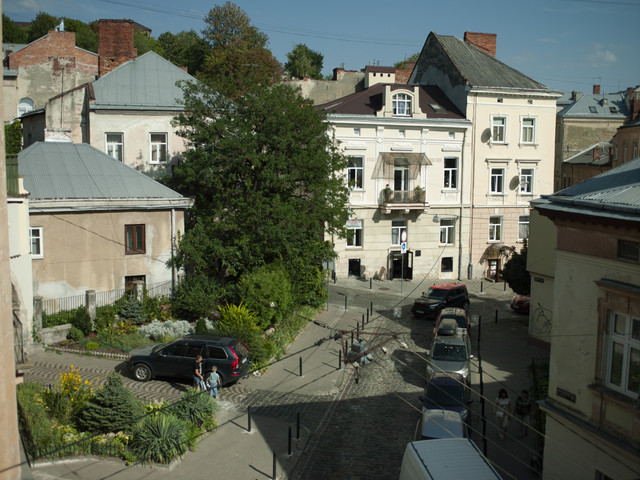
f/8.0
_________________
"Sharpness is a bourgeois concept" - © H. Cartier Bresson |
|
| Vissza az elejére |
|
|
LittleAlex
Csatlakozott: 2008.11.27. Csütörtök 0:13
Hozzászólások: 2085
Tartózkodási hely: L'vov (Western Ukraine)
|
Elküldve: Pént. Szept. 06, 2024 8:19 pm Hozzászólás témája: |
|
Elküldve: Pént. Szept. 06, 2024 8:19 pm Hozzászólás témája: |
|
|
LittleAlex wrote:
What is very unusual, the MC sample has two little screws at the ring with inscriptions. I had to search hard to find sample with the same screws:
https://i.ebayimg.com/images/g/3VcAAOSwUQZmpmfx/s-l1600.webp
Commonly it is absent from the lenses. Wonder, why it was done at all.
_________________
"Sharpness is a bourgeois concept" - © H. Cartier Bresson |
|
| Vissza az elejére |
|
|
lumens pixel
Csatlakozott: 2019.02.27. Szerda 22:21
Hozzászólások: 1128
Expire: 2021-06-25
|
Elküldve: Szomb. Szept. 07, 2024 7:52 am Hozzászólás témája: Re: Carl Zeiss Jena Flektogon 50mm F4 Pentacon Six |
|
Elküldve: Szomb. Szept. 07, 2024 7:52 am Hozzászólás témája: Re: Carl Zeiss Jena Flektogon 50mm F4 Pentacon Six |
|
|
lumens pixel wrote:
| LittleAlex írta: |
From 90-th I own Carl Zeiss Jena Flektogon 50mm F4 Pentacon Six Medium Format Lens. Which was produced in the year 1974 (zebra). I used it long ago on the film Kievs cameras. After I obtained Medium Format digital camera I gave to that lens the new use.
Recently I obtained MC version ($120, but not in the best condition, however the optic part is good, and the diaphragm also works fine (but it was hardy used and unprofessionally serviced - is completely absent lever for the diaphragm repetition)). The serial number is for digits, and I am not able to clarify the year of production. I decided to compare them both in the test. To my surprise, the oldest showed little better sharpness, saturation and eve contrast! There are test samples:
Phase One 645 DF+ P25 back
Zebra lens:
f/4.0
f/8.0
MC version lens:
f/4.0
f/8.0
There is MC file with f/8.0 after it was hardly corrected in the Photoshop
|
Files are impressive.
Always wanted to try middle format. Didn't want to invest so much money so instead I stitched some pics. But I fully understand the merits of such tools.
_________________
Lumens Pixel
-------------
Minolta SR mount: 16 2,8; Sigma SuperWide 24 2,8; 28 2,5; 28 2,8; 28 3,5; 35 2,8; 45 2,0; 50 1,4; 50 1,7; 50 2,0; 58 1,4; 85 2,0; 100 2,5; 100 4 Macro; 135 3,5; 135 2,8; 200 4; RF 250 5,6; 24-35 3,5; 35-70 3,5; 75-150 4; 70-210 4
Canon FD mount: Tokina RMC 17 3,5; 28 2,8; 35 2,8; 50 1,8; 50 3,5 Macro; 55 1,2; 135 3,5; 135 2,5; 200 4,0; 300 5,6; 28-55 3,5 4,5; Tokina SZ-X SD 270; 70-150 4,5; 70-210 f4; 80-200 4L; Tokina SZ-X 845
Tamron Adaptall: 28-80 3,5-4,2 (27A); 70-210 3,8-4 (46A); 60-300 (23A); 90 2,5 (52B); 35-135 3,5-4,5 (40A)
Tamron SP: 20-40 2,7-3,5 (266D) |
|
| Vissza az elejére |
|
|
LittleAlex
Csatlakozott: 2008.11.27. Csütörtök 0:13
Hozzászólások: 2085
Tartózkodási hely: L'vov (Western Ukraine)
|
Elküldve: Szomb. Szept. 07, 2024 8:06 am Hozzászólás témája: Re: Carl Zeiss Jena Flektogon 50mm F4 Pentacon Six |
|
Elküldve: Szomb. Szept. 07, 2024 8:06 am Hozzászólás témája: Re: Carl Zeiss Jena Flektogon 50mm F4 Pentacon Six |
|
|
LittleAlex wrote:
| lumens pixel írta: |
Always wanted to try middle format. Didn't want to invest so much money so instead I stitched some pics. But I fully understand the merits of such tools. |
Today, if you are patient, you are able to gather entier system piece by piece for the very affordable prices. As I did for Phase One 645 system.
_________________
"Sharpness is a bourgeois concept" - © H. Cartier Bresson |
|
| Vissza az elejére |
|
|
Noritar

Csatlakozott: 2024.07.25. Csütörtök 3:47
Hozzászólások: 91
|
Elküldve: Szomb. Szept. 07, 2024 11:50 am Hozzászólás témája: |
|
Elküldve: Szomb. Szept. 07, 2024 11:50 am Hozzászólás témája: |
|
|
Noritar wrote:
If we're looking at the same thing, those are holes that were drilled so a spanner could be used to remove the name ring in order to service the lens. If the name ring is very tight or siezed, or if the technician doesn't have a large enough soft tool to grip the ring well, then these holes are drilled. This is common on lenses with very large name rings like the 50 Flek and 180 Sonnar, but sometimes seen on smaller lenses as well. |
|
| Vissza az elejére |
|
|
LittleAlex
Csatlakozott: 2008.11.27. Csütörtök 0:13
Hozzászólások: 2085
Tartózkodási hely: L'vov (Western Ukraine)
|
Elküldve: Szomb. Szept. 07, 2024 12:16 pm Hozzászólás témája: |
|
Elküldve: Szomb. Szept. 07, 2024 12:16 pm Hozzászólás témája: |
|
|
LittleAlex wrote:
| Noritar írta: |
| , those are holes that were drilled so a spanner could be used to remove the name ring in order to service the lens. |
Yes - firstly I suggested it myself. But there are not the simple holes, but in them are the tiny screws. And I don't imagine at all any service men who would care to do that. And for what reason?
Manly that kind of screws are intended to prevent the ring from self unscrewing in time. By the factory producing it.
_________________
"Sharpness is a bourgeois concept" - © H. Cartier Bresson |
|
| Vissza az elejére |
|
|
Noritar
Csatlakozott: 2024.07.25. Csütörtök 3:47
Hozzászólások: 91
|
Elküldve: Szomb. Szept. 07, 2024 8:21 pm Hozzászólás témája: |
|
Elküldve: Szomb. Szept. 07, 2024 8:21 pm Hozzászólás témája: |
|
|
Noritar wrote:
| LittleAlex írta: |
And for what reason?
|
My guess is the technician did this as an upgrade to prevent seizing in the future. Don't need to tighten as much if using set screws, and less risk of the ring coming loose. Or maybe the name ring threads are damaged? Open it up and find out! |
|
| Vissza az elejére |
|
|
LittleAlex
Csatlakozott: 2008.11.27. Csütörtök 0:13
Hozzászólások: 2085
Tartózkodási hely: L'vov (Western Ukraine)
|
Elküldve: Szomb. Szept. 07, 2024 11:02 pm Hozzászólás témája: |
|
Elküldve: Szomb. Szept. 07, 2024 11:02 pm Hozzászólás témája: |
|
|
LittleAlex wrote:
| Noritar írta: |
| Open it up and find out! |
I rather wouldn't! 
"Curiosity dead the cat!" (с)
_________________
"Sharpness is a bourgeois concept" - © H. Cartier Bresson |
|
| Vissza az elejére |
|
|
stevemark

Csatlakozott: 2011.04.29. Péntek 18:40
Hozzászólások: 5511
Tartózkodási hely: Switzerland
|
Elküldve: Szomb. Szept. 14, 2024 2:33 pm Hozzászólás témája: |
|
Elküldve: Szomb. Szept. 14, 2024 2:33 pm Hozzászólás témája: |
|
|
stevemark wrote:
| lumens pixel írta: |
Files are impressive.
Always wanted to try middle format. Didn't want to invest so much money so instead I stitched some pics. But I fully understand the merits of such tools. |
Resolution looks fine, but not really impressive (I downloaded the "Zebra" f8 image and looked at it in Photoshop). The tiny Minolta MD 2.8/35mm on a Sony A7RII would give a similar resolution.
As to the Mamiya / Zeiss comparison:
The Mamiya has visibly better resolution in the upper corners (= further away), the Zebra Zeiss has better lower corners (= closer distances). That means you have an issue with proper focusing here, or possibly with the adapters (play and / or missing parallelism ??).
That said, I very well may get a used large MF back for my Mamiya 645 system at some point - just for fun.
Or a used 100MP Fuji ... since the 50 MP Fuji wasn't better at all compared to my 43 MP Sony A7RII 
S
_________________
www.artaphot.ch |
|
| Vissza az elejére |
|
|
LittleAlex
Csatlakozott: 2008.11.27. Csütörtök 0:13
Hozzászólások: 2085
Tartózkodási hely: L'vov (Western Ukraine)
|
Elküldve: Szer. Szept. 18, 2024 7:34 pm Hozzászólás témája: |
|
Elküldve: Szer. Szept. 18, 2024 7:34 pm Hozzászólás témája: |
|
|
LittleAlex wrote:
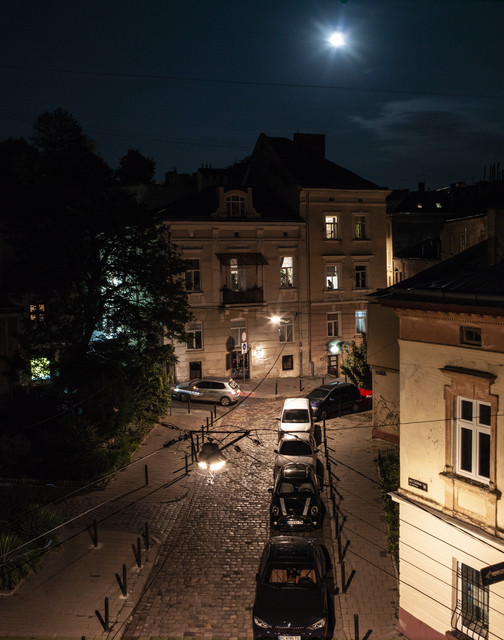
Phase One 645 DF+ P25 back
f/11.0 15,0 s; ISO 400
Tripod
_________________
"Sharpness is a bourgeois concept" - © H. Cartier Bresson |
|
| Vissza az elejére |
|
|
LittleAlex
Csatlakozott: 2008.11.27. Csütörtök 0:13
Hozzászólások: 2085
Tartózkodási hely: L'vov (Western Ukraine)
|
Elküldve: Csüt. Szept. 19, 2024 11:34 am Hozzászólás témája: |
|
Elküldve: Csüt. Szept. 19, 2024 11:34 am Hozzászólás témája: |
|
|
LittleAlex wrote:
| stevemark írta: |
Resolution looks fine, but not really impressive
S |
Really to say - the resolution is only part of the general impression from photography.
For example - I consciencely had chosen Sony a7s because it has only 12 mega pixels. However Sony A7RII of course would have (theoretically) much more resolution. Because they are "fat" pixels. Which makes much more impression, like the "analog impression". Same with Canon 5d mark one.
Same with lenses.
_________________
"Sharpness is a bourgeois concept" - © H. Cartier Bresson |
|
| Vissza az elejére |
|
|
stevemark
Csatlakozott: 2011.04.29. Péntek 18:40
Hozzászólások: 5511
Tartózkodási hely: Switzerland
|
Elküldve: Csüt. Szept. 19, 2024 1:49 pm Hozzászólás témája: |
|
Elküldve: Csüt. Szept. 19, 2024 1:49 pm Hozzászólás témája: |
|
|
stevemark wrote:
| LittleAlex írta: |
| stevemark írta: |
Resolution looks fine, but not really impressive
S |
Really to say - the resolution is only part of the general impression from photography.
For example - I consciencely had chosen Sony a7s because it has only 12 mega pixels. However Sony A7RII of course would have (theoretically) much more resolution. Because they are "fat" pixels. Which makes much more impression, like the "analog impression". Same with Canon 5d mark one.
Same with lenses. |
Sure, I'm aware of that. I recently looked at images taken 20 years ago with my first Konica Minolta Dynax 7D. The colors are incredibly nice indeed (CCD sensor plus Konica knowledge about colors and film plus Minolta knowldge about color metering ... lots of expertise there!!).
However in 2020, when I was about to get the Fuji GFX 50 MP, I compared it side-by-side with my A900 and A7RII FF cameras - and couldn't find a real advantage (but many disadvantages). So I decided not to buy it - and I spent my money buying a few nice lenses including the nFD 1.2/85 L, the nFD 1.2/50 L, and a beautiful Nikon F2 set including the super rare ED Nikkor Ai 4/300mm (non-IF!).
That was probably a good decision.
However, if I'd find a cheap CCD back for my Mamiya 645 System I probably would buy it too - just for fun and experiments !!
S
_________________
www.artaphot.ch |
|
| Vissza az elejére |
|
|
LittleAlex
Csatlakozott: 2008.11.27. Csütörtök 0:13
Hozzászólások: 2085
Tartózkodási hely: L'vov (Western Ukraine)
|
Elküldve: Csüt. Szept. 19, 2024 8:00 pm Hozzászólás témája: |
|
Elküldve: Csüt. Szept. 19, 2024 8:00 pm Hozzászólás témája: |
|
|
LittleAlex wrote:
| stevemark írta: |
However, if I'd find a cheap CCD back for my Mamiya 645 System I probably would buy it too - just for fun and experiments !!
S |
Well, I obtained my P25 for $1000 on Ebay in the very good condition.
However, to use it you need to obtain firs an AF camera body.
_________________
"Sharpness is a bourgeois concept" - © H. Cartier Bresson |
|
| Vissza az elejére |
|
|
LittleAlex
Csatlakozott: 2008.11.27. Csütörtök 0:13
Hozzászólások: 2085
Tartózkodási hely: L'vov (Western Ukraine)
|
Elküldve: Szomb. Szept. 21, 2024 8:00 am Hozzászólás témája: |
|
Elküldve: Szomb. Szept. 21, 2024 8:00 am Hozzászólás témája: |
|
|
LittleAlex wrote:
[quote="stevemark"]
| lumens pixel írta: |
Or a used 100MP Fuji ... since the 50 MP Fuji wasn't better at all compared to my 43 MP Sony A7RII
S |
There is in-studio test to see if there is any noticeable difference in IQ between 35mm DLSR Canon 5D mark II and Phase One p25+ medium format digital back:
https://www.photigy.com/school/canon-5d-mark-ii-and-phaseone-p25-does-a-physical-sensor-size-make-a-difference/
_________________
"Sharpness is a bourgeois concept" - © H. Cartier Bresson |
|
| Vissza az elejére |
|
|
stevemark
Csatlakozott: 2011.04.29. Péntek 18:40
Hozzászólások: 5511
Tartózkodási hely: Switzerland
|
Elküldve: Szomb. Szept. 21, 2024 12:37 pm Hozzászólás témája: |
|
Elküldve: Szomb. Szept. 21, 2024 12:37 pm Hozzászólás témája: |
|
|
stevemark wrote:
Thank you for the link!
Concerning resolution it has the same outcome as my comparison of Sony A7RII & MinAF 2.8/100mm vs Fuji GFX50 & Mamyia Sekor A 4/120mm: A slightly better micro contrast and, to some extent, detail resolution (very sklightly indeed).
Concerning colors we had a group of people from a museum looking at the samples (mainly golden, silver and wooden objects as well as paintings and cloths) as well as at the images (Sony vs Fuji). Sometimes Fuji was preferred, sometimes Sony. For landscape purposes I clearly preferred the Sony A7RII.
To summarize it: Unlike with the transition from Sony A700 to A900 (which was a huge step in image quality), there were no clearly visible improvements when changing from A7RII to GFX50 - and as a result I didn't buy the GFX.
And as an addidtion: The Sony cameras have a "neutral" option for colors (which I never use), and it probably is pretty close to the colors I see from elder CCD backs ... would be interesting to compare them side-by-side!
The only CCD sensors I currently have are Minolta Dynax 7D (6M) and Sony A100 (10MP). Their big advantage is the much more "correct" rendering of the orange/yellow light from sodium-vapour lamps (street lights).
S
_________________
www.artaphot.ch |
|
| Vissza az elejére |
|
|
Noritar
Csatlakozott: 2024.07.25. Csütörtök 3:47
Hozzászólások: 91
|
Elküldve: Szomb. Szept. 21, 2024 6:56 pm Hozzászólás témája: Solid performer. |
|
Elküldve: Szomb. Szept. 21, 2024 6:56 pm Hozzászólás témája: Solid performer. |
|
|
Noritar wrote:
The 50mm f4 Flektogon is a great lens in its own right. It's a solid wide option, especially for people who already use the 180/2.8 because they use the same 86mm filter size. Is it the "best" 6x6 wide? Probably not. But I've used this lens many times on film and was never dissapointed. The lens is ideal to pair with the other CZJ 80, 120, 180, and 300 options. They are affordable too!
If you need faster, sharper, smaller, bring money. |
|
| Vissza az elejére |
|
|
stevemark
Csatlakozott: 2011.04.29. Péntek 18:40
Hozzászólások: 5511
Tartózkodási hely: Switzerland
|
Elküldve: Vas. Szept. 22, 2024 12:33 pm Hozzászólás témája: Re: Solid performer. |
|
Elküldve: Vas. Szept. 22, 2024 12:33 pm Hozzászólás témája: Re: Solid performer. |
|
|
stevemark wrote:
| Noritar írta: |
| The 50mm f4 Flektogon is a great lens in its own right. It's a solid wide option, especially for people who already use the 180/2.8 because they use the same 86mm filter size. Is it the "best" 6x6 wide? Probably not. But I've used this lens many times on film and was never dissapointed. The lens is ideal to pair with the other CZJ 80, 120, 180, and 300 options. They are affordable too! |
I have two (defective) Pentacon Six cameras with the coresponding CZJ 2.8/80mm and 2.8/180mm lenses. They all would need professional servicing - but they certainly would make a nice set for b/w portraits on film! Occasionally I thought about the CZJ 50mm, but it doesn't make much sense as long as I don't have a working Pentacon Six!
S
_________________
www.artaphot.ch |
|
| Vissza az elejére |
|
|
LittleAlex
Csatlakozott: 2008.11.27. Csütörtök 0:13
Hozzászólások: 2085
Tartózkodási hely: L'vov (Western Ukraine)
|
Elküldve: Hétf. Szept. 23, 2024 9:44 am Hozzászólás témája: |
|
Elküldve: Hétf. Szept. 23, 2024 9:44 am Hozzászólás témája: |
|
|
LittleAlex wrote:
[quote="stevemark"]
| lumens pixel írta: |
As to the Mamiya / Zeiss comparison:
S |
I was considering, whether it is worthy to replace Mamiya 55/2.8 645 manual lens by the same, but more modern, with AF. There I discovered the discussion, from which I concluded, that generally Mamiya didn’t change formula for the lens. But only raised up tolerances and quality of producing process for the lasted digital lenses. Which contribute for their better resolution.
https://www.getdpi.com/forum/index.php?threads/mamiya-55mm-f-2-8-af-for-digital.54221/
Which might be as well applicable to the other lenses too.
Which of course testifies that the old Mamiya lenses had not been of the best possible production quality.
_________________
"Sharpness is a bourgeois concept" - © H. Cartier Bresson
A hozzászólás legutóbb LittleAlex által Hétf. Szept. 23, 2024 9:53 am-kor lett szerkesztve, összesen 1 alkalommal. |
|
| Vissza az elejére |
|
|
LittleAlex
Csatlakozott: 2008.11.27. Csütörtök 0:13
Hozzászólások: 2085
Tartózkodási hely: L'vov (Western Ukraine)
|
Elküldve: Hétf. Szept. 23, 2024 9:51 am Hozzászólás témája: Re: Solid performer. |
|
Elküldve: Hétf. Szept. 23, 2024 9:51 am Hozzászólás témája: Re: Solid performer. |
|
|
LittleAlex wrote:
[quote="stevemark"]
| Noritar írta: |
but it doesn't make much sense as long as I don't have a working Pentacon Six!
S |
Well, I use all my CZJ lenses on Mamiya bodies by adaptor. I am not the great fan for the square format anyway.
However Zodiac-8 3,5 /30 fish eye lens really gives its own exactly on the square. For that reason I steel keep Kiev 60 camera.
_________________
"Sharpness is a bourgeois concept" - © H. Cartier Bresson |
|
| Vissza az elejére |
|
|
stevemark
Csatlakozott: 2011.04.29. Péntek 18:40
Hozzászólások: 5511
Tartózkodási hely: Switzerland
|
Elküldve: Kedd. Szept. 24, 2024 12:04 am Hozzászólás témája: |
|
Elküldve: Kedd. Szept. 24, 2024 12:04 am Hozzászólás témája: |
|
|
stevemark wrote:
| LittleAlex írta: |
Which of course testifies that the old Mamiya lenses had not been of the best possible production quality. |
Not sure about that - it was simply appropriate given the inherent drawbacks and problems of films and film backs (the missing flatness of the 120 film was/is a huge problem, for instance). It just didn't make sense to produce those lenses to tighter tolerances ... In spite of "not ... the best possible production quality" those lenses have a much higher resolution that the average 100 ISO film ... which shows in todays high res sensors!
S
_________________
www.artaphot.ch |
|
| Vissza az elejére |
|
|
LittleAlex
Csatlakozott: 2008.11.27. Csütörtök 0:13
Hozzászólások: 2085
Tartózkodási hely: L'vov (Western Ukraine)
|
Elküldve: Szer. Szept. 25, 2024 6:10 pm Hozzászólás témája: |
|
Elküldve: Szer. Szept. 25, 2024 6:10 pm Hozzászólás témája: |
|
|
LittleAlex wrote:
| stevemark írta: |
It just didn't make sense to produce those lenses to tighter tolerances
S |
Well, but why then AF lenses of the later production data (with "D") generally resolve much better then the early ones of the same optical formula on the modern digital backs - as people affirm at that forum?
| stevemark írta: |
It just didn't make sense to produce those lenses to tighter tolerances
S |
Why - maybe there were problems of competition at the digital back era?
Anyway, I didn't hear as much problems with fogging of the between lens balsam with other manufacturers, as I did with Mamiya.
https://forum.mflenses.com/mamiya-sekor-645-c-35mm-f3-5-haze-inside-the-lens-t84981.html
_________________
"Sharpness is a bourgeois concept" - © H. Cartier Bresson |
|
| Vissza az elejére |
|
|
stevemark
Csatlakozott: 2011.04.29. Péntek 18:40
Hozzászólások: 5511
Tartózkodási hely: Switzerland
|
Elküldve: Szer. Szept. 25, 2024 6:34 pm Hozzászólás témája: |
|
Elküldve: Szer. Szept. 25, 2024 6:34 pm Hozzászólás témája: |
|
|
stevemark wrote:
I have no experience comparing older (MF) and newer (AF) version of nominally the same computations for Sekor C lenses. Therefore the following is (informed) speculation on my side, not knowledge.
If in fact the performance of nominally "identical" computations has changed (improvend), going from earlier MF Sekor C lenses to later AF Sekor C lenses, it might have the following causes:
1) Older lenses re-computated without visibly changing the lens sections. Examples are well documented for several common Nikkors on Marco Cavina's webpage. Known also for e. g. Minolta MC-I/AR => MC-II 1.4/58mm and Minolta MD-I => MD-III 35-70mm. Canon did it also for their nFD 80-200 / 80-200 L and 100-300 / 100-300 L lenses (fluorite lens replacing an LD lens, and slightly changing the radii of that lens)
2) Tighter mechanical tolerances because now, on digital backs, improved performance actually can bee seen (as opposed to previous film backs)
3) Less wear-and-tear (MF lenses are 20 years older than AF ones), including less fogging
4) Better coatings
S
_________________
www.artaphot.ch |
|
| Vissza az elejére |
|
|
LittleAlex
Csatlakozott: 2008.11.27. Csütörtök 0:13
Hozzászólások: 2085
Tartózkodási hely: L'vov (Western Ukraine)
|
Elküldve: Hétf. Nov. 04, 2024 11:17 pm Hozzászólás témája: |
|
Elküldve: Hétf. Nov. 04, 2024 11:17 pm Hozzászólás témája: |
|
|
LittleAlex wrote:
| stevemark írta: |
| I have no experience comparing older (MF) and newer (AF) version of nominally the same computations for Sekor C lenses. |
At the end I obtained Mamiya 645 AF 55mm 2,8 lens for $140 on Ebay (the final cost to destination point was hovever $170). Didn't compare it to the manual one directly, but already discovered, that it is very convenient for the street photography:
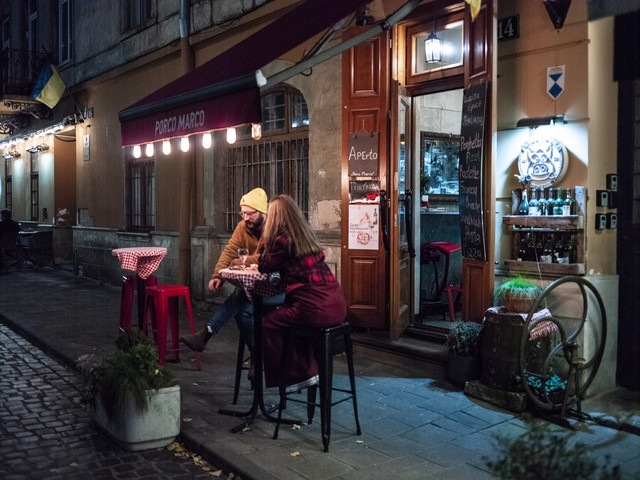
Exif: ISO 800, 55mm, f2.8, 1/30s

Exif: ISO 800, 55mm, f5.6, 1/15s
There are also some other samples :
https://forum.mflenses.com/mamiya-645-af-55mm-2-8-t85527.html
_________________
"Sharpness is a bourgeois concept" - © H. Cartier Bresson |
|
| Vissza az elejére |
|
|
Noritar
Csatlakozott: 2024.07.25. Csütörtök 3:47
Hozzászólások: 91
|
Elküldve: Kedd. Nov. 05, 2024 7:46 pm Hozzászólás témája: |
|
Elküldve: Kedd. Nov. 05, 2024 7:46 pm Hozzászólás témája: |
|
|
Noritar wrote:
| LittleAlex írta: |
|
I looked at this image for a long time. It is captivating. |
|
| Vissza az elejére |
|
|
|
|
 Magyar
 Español
 中文
 Русский
 Deutsch
 日本語
 Français



