| Előző téma megtekintése :: Következő téma megtekintése |
| Szerző |
Üzenet |
NiceDays 

Csatlakozott: 2021.06.25. Péntek 18:10
Hozzászólások: 100
|
 Elküldve: Szer. Júl. 20, 2022 7:07 pm Hozzászólás témája: Linear polarizing filter vs CPL? |
|
Elküldve: Szer. Júl. 20, 2022 7:07 pm Hozzászólás témája: Linear polarizing filter vs CPL? |
|
|
NiceDays wrote:
I have mirrorless camera, want to try linear polarizing filter as CPL makes image way too soft, and good CPL is too expensive, i heard Linear Polarizing Filters work same and degrade image less.
Any advice as of which particular brand to go for?
I think i am limited to oldies from eBay as i find no other source where to buy one, they don't make them anymore? |
|
| Vissza az elejére |
|
 |
Dejan

Csatlakozott: 2021.01.05. Kedd 21:00
Hozzászólások: 184
Tartózkodási hely: Belgrade
|
Elküldve: Szer. Júl. 20, 2022 10:33 pm Hozzászólás témája: |
|
Elküldve: Szer. Júl. 20, 2022 10:33 pm Hozzászólás témája: |
|
|
Dejan wrote:
You can try Haida Pro CPL for example, they are cheap and I see no IQ degradation at all, very comparable to some more expensive filters I have; which is no surprise because they use good glass. Many filters are good, as long as you avoid those cheapest Chinese off-brand filters. |
|
| Vissza az elejére |
|
|
DConvert


Csatlakozott: 2010.06.12. Szombat 21:44
Hozzászólások: 984
Tartózkodási hely: Essex UK
|
Elküldve: Csüt. Júl. 21, 2022 9:28 am Hozzászólás témája: |
|
Elküldve: Csüt. Júl. 21, 2022 9:28 am Hozzászólás témája: |
|
|
DConvert wrote:
I've not seen any significant price difference between CPLs & linear polarisers for 20 years
In addition this is the first I've heard of CPLs degrading the image beyond that of other filters. |
|
| Vissza az elejére |
|
|
calvin83


Csatlakozott: 2009.04.12. Vasárnap 17:57
Hozzászólások: 7740
Tartózkodási hely: Hong Kong
|
Elküldve: Csüt. Júl. 21, 2022 12:07 pm Hozzászólás témája: |
|
Elküldve: Csüt. Júl. 21, 2022 12:07 pm Hozzászólás témája: |
|
|
calvin83 wrote:
Most filter makers don't make circular PL anymore. For mirrorless camera, you can use a PL or CPL. You will only need to use a CPL on a SLR.
More glass in front of a lens may degrade image quality, depend on the flatness/coating etc....
_________________
The best lens is the one you have with you.
https://lensfever.com/
https://www.instagram.com/_lens_fever/ |
|
| Vissza az elejére |
|
|
visualopsins

Csatlakozott: 2009.03.05. Csütörtök 19:40
Hozzászólások: 11700
Tartózkodási hely: California
Expire: 2027-07-11
|
Elküldve: Csüt. Júl. 21, 2022 3:05 pm Hozzászólás témája: |
|
Elküldve: Csüt. Júl. 21, 2022 3:05 pm Hozzászólás témája: |
|
|
visualopsins wrote:
https://www.cambridgeincolour.com/tutorials/camera-lens-filters.htm
| Idézet: |
Polarizers dramatically reduce the amount of light reaching the camera's sensor — often by 2-3 f-stops (1/4 to 1/8 the amount of light). This means that the risk of a blurred handheld image goes up dramatically, and may make some action shots prohibitive.
...
Additionally, using a polarizer on a wide angle lens can produce an uneven or unrealistic looking sky which visibly darkens. In the example to the left, the sky could be considered unusually uneven and too dark at the top.
Linear vs. Circular Polarizing Filters: The circular polarizing variety is designed so that the camera's metering and autofocus systems can still function. Linear polarizers are much less expensive, but cannot be used with cameras that have through-the-lens (TTL) metering and autofocus — meaning nearly all digital SLR cameras. One could of course forego metering and autofocus, but that is rarely desirable. |
https://www.cambridgeincolour.com/tutorials/polarizing-filters.htm
_________________
☮☮☮☮☮☮☮☮☮☮☮☮☮☮☮☮☮☮☮☮☮☮☮☮☮☮☮☮☮☮☮☮ like attracts like! ☮☮☮☮☮☮☮☮☮☮☮☮☮☮☮☮☮☮☮☮☮☮☮☮☮☮☮☮☮☮☮☮
Cameras: Sony ILCE-7RM2, Spotmatics II, F, and ESII, Nikon P4
Lenses:
M42 Asahi Optical Co., Takumar 1:4 f=35mm, 1:2 f=58mm (Sonnar), 1:2.4 f=58mm (Heliar), 1:2.2 f=55mm (Gaussian), 1:2.8 f=105mm (Model I), 1:2.8/105 (Model II), 1:5.6/200, Tele-Takumar 1:5.6/200, 1:6.3/300, Macro-Takumar 1:4/50, Auto-Takumar 1:2.3 f=35, 1:1.8 f=55mm, 1:2.2 f=55mm, Super-TAKUMAR 1:3.5/28 (fat), 1:2/35 (Fat), 1:1.4/50 (8-element), Super-Multi-Coated Fisheye-TAKUMAR 1:4/17, Super-Multi-Coated TAKUMAR 1:4.5/20, 1:3.5/24, 1:3.5/28, 1:2/35, 1:3.5/35, 1:1.8/85, 1:1.9/85 1:2.8/105, 1:3.5/135, 1:2.5/135 (II), 1:4/150, 1:4/200, 1:4/300, 1:4.5/500, Super-Multi-Coated Macro-TAKUMAR 1:4/50, 1:4/100, Super-Multi-Coated Bellows-TAKUMAR 1:4/100, SMC TAKUMAR 1:1.4/50, 1:1.8/55
M42 Carl Zeiss Jena Flektogon 2.4/35
Contax Carl Zeiss Vario-Sonnar T* 28-70mm F3.5-4.5
Pentax K-mount SMC PENTAX-A ZOOM 1:3.5 35~105mm, SMC PENTAX ZOOM 1:4 45~125mm
Nikon Micro-NIKKOR-P-C Auto 1:3.5 f=55mm, NIKKOR-P Auto 105mm f/2.5 Pre-AI (Sonnar), Micro-NIKKOR 105mm 1:4 AI, NIKKOR AI-S 35-135mm f/3,5-4,5
Solinon 1:5.6/18 ASPH.
Tamron SP 17mm f/3.5 (51B), Tamron SP 17mm f/3.5 (151B), SP 500mm f/8 (55BB), SP 70-210mm f/3.5 (19AH)
Vivitar 100mm 1:2.8 MC 1:1 Macro Telephoto (Kiron)
A hozzászólás legutóbb visualopsins által Csüt. Júl. 21, 2022 3:40 pm-kor lett szerkesztve, összesen 1 alkalommal. |
|
| Vissza az elejére |
|
|
RokkorDoctor

Csatlakozott: 2021.11.27. Szombat 15:19
Hozzászólások: 1562
Tartózkodási hely: Kent, UK
Expire: 2025-05-01
|
Elküldve: Csüt. Júl. 21, 2022 3:35 pm Hozzászólás témája: Re: Linear polarizing filter vs CPL? |
|
Elküldve: Csüt. Júl. 21, 2022 3:35 pm Hozzászólás témája: Re: Linear polarizing filter vs CPL? |
|
|
RokkorDoctor wrote:
| NiceDays írta: |
I have mirrorless camera, want to try linear polarizing filter as CPL makes image way too soft, and good CPL is too expensive, i heard Linear Polarizing Filters work same and degrade image less.
Any advice as of which particular brand to go for?
I think i am limited to oldies from eBay as i find no other source where to buy one, they don't make them anymore? |
Plenty of OEM linear polarizer filters on eBay from the late MF era (they are almost always linear). Minolta, Nikon, Canon, Pentax etc. They are all good, but the coatings will be a bit older technology.
For older B+W (=Schneider) or Heliopan (=Zeiss) ones you'll probably pay more.
Then there is also the cheaper HOYA option.
Stay clear from the no-name generic Japanese/Chinese ones if you can.
As far as I know all these filters are made as a sandwich by cementing a thin foil of polarizing plastic between two thin optical glass flats. So short of the rare possibility of the manufacturers messing up the production of two optically flat pieces of glass, any image degradation would be down to the optical quality (or not!) of the plastic foil used or a cementing issue.
_________________
Mark
SONY A7S, A7RII + dust-sealed modded Novoflex/Fotodiox/Rayqual MD-NEX adapters
Minolta SR-1, SRT-101/303, XD7/XD11, XGM, X700
Bronica SQAi
Ricoh GX100
Minolta majority of all Rokkor SR/AR/MC/MD models made
Sigma 14mm/3.5 for SR mount
Tamron SP 60B 300mm/2.8 (Adaptall)
Samyang T-S 24mm/3.5 (Nikon mount, DIY converted to SR mount)
Schneider-Kreuznach PC-Super-Angulon 28mm/2.8 (SR mount)
Bronica PS 35/40/50/65/80/110/135/150/180/200/250mm |
|
| Vissza az elejére |
|
|
cooltouch

Csatlakozott: 2009.01.15. Csütörtök 16:28
Hozzászólások: 9096
Tartózkodási hely: Houston, Texas
|
Elküldve: Csüt. Júl. 21, 2022 4:33 pm Hozzászólás témája: |
|
Elküldve: Csüt. Júl. 21, 2022 4:33 pm Hozzászólás témája: |
|
|
cooltouch wrote:
You know, when using a polarizer, I always find it helps to use the old thumb and fingers rule I learned in a physics class way back when to find out where the polarization actually occurs. This helps you set up your shots.
Assuming a sky with the sun in view, point your thumb at the sun with your fingers aimed outward. Pivoting your thumb about its axis, while making sure it stays pointed at the sun, the arc your fingers sweep across the sky is where the polarization will take place. For instance, early morning or late afternoon, the arc will be almost overhead. At high noon, the arc will be at the horizon.
_________________
Michael
My Gear List: http://michaelmcbroom.com/photo/gear.html
My Gallery: http://michaelmcbroom.com/gallery3/index.php/
My Flickr Page: https://www.flickr.com/photos/11308754@N08/albums
My Music: https://soundcloud.com/michaelmcbroom/albums
My Blog: http://michaelmcbroom.com/blogistan/ |
|
| Vissza az elejére |
|
|
titrisol70

Csatlakozott: 2021.12.14. Kedd 3:10
Hozzászólások: 211
Tartózkodási hely: State of Denial
|
Elküldve: Csüt. Júl. 21, 2022 5:12 pm Hozzászólás témája: |
|
Elküldve: Csüt. Júl. 21, 2022 5:12 pm Hozzászólás témája: |
|
|
titrisol70 wrote:
If my memory serves me right CPL replaced linear PL to aid the AF systems of the cameras in the late 80s/early 90s by avoiding cross-polarization of the AF mirrors/sensors
A good LPL should work fine, as long as you are manual focusing but beware of the issues with focusing |
|
| Vissza az elejére |
|
|
visualopsins
Csatlakozott: 2009.03.05. Csütörtök 19:40
Hozzászólások: 11700
Tartózkodási hely: California
Expire: 2027-07-11
|
Elküldve: Csüt. Júl. 21, 2022 5:29 pm Hozzászólás témája: |
|
Elküldve: Csüt. Júl. 21, 2022 5:29 pm Hozzászólás témája: |
|
|
visualopsins wrote:
The "old thumb and fingers rule" has many applications in physics -- for example, when current passes through a wire in the direction the thumb points, the fingers wrap around the wire in the same direction as the magnetic field created. Works the other way too -- wrap fingers in direction of magnetic field aroujd a wire and thumb points the direction of current flow.
In mathematics aka "The Right Hand Rule":
https://en.m.wikipedia.org/wiki/Right-hand_rule
http://physicsed.buffalostate.edu/SeatExpts/resource/rhr/rhr.htm
_________________
☮☮☮☮☮☮☮☮☮☮☮☮☮☮☮☮☮☮☮☮☮☮☮☮☮☮☮☮☮☮☮☮ like attracts like! ☮☮☮☮☮☮☮☮☮☮☮☮☮☮☮☮☮☮☮☮☮☮☮☮☮☮☮☮☮☮☮☮
Cameras: Sony ILCE-7RM2, Spotmatics II, F, and ESII, Nikon P4
Lenses:
M42 Asahi Optical Co., Takumar 1:4 f=35mm, 1:2 f=58mm (Sonnar), 1:2.4 f=58mm (Heliar), 1:2.2 f=55mm (Gaussian), 1:2.8 f=105mm (Model I), 1:2.8/105 (Model II), 1:5.6/200, Tele-Takumar 1:5.6/200, 1:6.3/300, Macro-Takumar 1:4/50, Auto-Takumar 1:2.3 f=35, 1:1.8 f=55mm, 1:2.2 f=55mm, Super-TAKUMAR 1:3.5/28 (fat), 1:2/35 (Fat), 1:1.4/50 (8-element), Super-Multi-Coated Fisheye-TAKUMAR 1:4/17, Super-Multi-Coated TAKUMAR 1:4.5/20, 1:3.5/24, 1:3.5/28, 1:2/35, 1:3.5/35, 1:1.8/85, 1:1.9/85 1:2.8/105, 1:3.5/135, 1:2.5/135 (II), 1:4/150, 1:4/200, 1:4/300, 1:4.5/500, Super-Multi-Coated Macro-TAKUMAR 1:4/50, 1:4/100, Super-Multi-Coated Bellows-TAKUMAR 1:4/100, SMC TAKUMAR 1:1.4/50, 1:1.8/55
M42 Carl Zeiss Jena Flektogon 2.4/35
Contax Carl Zeiss Vario-Sonnar T* 28-70mm F3.5-4.5
Pentax K-mount SMC PENTAX-A ZOOM 1:3.5 35~105mm, SMC PENTAX ZOOM 1:4 45~125mm
Nikon Micro-NIKKOR-P-C Auto 1:3.5 f=55mm, NIKKOR-P Auto 105mm f/2.5 Pre-AI (Sonnar), Micro-NIKKOR 105mm 1:4 AI, NIKKOR AI-S 35-135mm f/3,5-4,5
Solinon 1:5.6/18 ASPH.
Tamron SP 17mm f/3.5 (51B), Tamron SP 17mm f/3.5 (151B), SP 500mm f/8 (55BB), SP 70-210mm f/3.5 (19AH)
Vivitar 100mm 1:2.8 MC 1:1 Macro Telephoto (Kiron)
|
|
| Vissza az elejére |
|
|
DConvert
Csatlakozott: 2010.06.12. Szombat 21:44
Hozzászólások: 984
Tartózkodási hely: Essex UK
|
Elküldve: Csüt. Júl. 21, 2022 6:37 pm Hozzászólás témája: |
|
Elküldve: Csüt. Júl. 21, 2022 6:37 pm Hozzászólás témája: |
|
|
DConvert wrote:
| cooltouch írta: |
You know, when using a polarizer, I always find it helps to use the old thumb and fingers rule I learned in a physics class way back when to find out where the polarization actually occurs. This helps you set up your shots.
Assuming a sky with the sun in view, point your thumb at the sun with your fingers aimed outward. Pivoting your thumb about its axis, while making sure it stays pointed at the sun, the arc your fingers sweep across the sky is where the polarization will take place. For instance, early morning or late afternoon, the arc will be almost overhead. At high noon, the arc will be at the horizon. |
That only applies to darkening skies, for controlling reflections maximum effect will be seen when aiming towards the light source with the light hitting the surface at Brewster's angle,
I find controlling reflections (both reducing & boosting them) to be a better use of a polariser, but then I shoot lots of IR which deals with the cloud contrast far more than a polariser  |
|
| Vissza az elejére |
|
|
kypfer
Csatlakozott: 2017.09.27. Szerda 22:39
Hozzászólások: 616
Tartózkodási hely: Jersey C.I.
|
Elküldve: Csüt. Júl. 21, 2022 10:14 pm Hozzászólás témája: Re: Linear polarizing filter vs CPL? |
|
Elküldve: Csüt. Júl. 21, 2022 10:14 pm Hozzászólás témája: Re: Linear polarizing filter vs CPL? |
|
|
kypfer wrote:
| NiceDays írta: |
I have mirrorless camera, want to try linear polarizing filter as CPL makes image way too soft, and good CPL is too expensive, i heard Linear Polarizing Filters work same and degrade image less.
Any advice as of which particular brand to go for?
I think i am limited to oldies from eBay as i find no other source where to buy one, they don't make them anymore? |
I use linear polarisers on my Pentax DSLRs extensively, they (usually) give a more pronounced effect than circular polarisers and cost little more than pennies on eBay as most people want circular polarisers these days 
I see much written about CPL filters being needed so as to not affect a/f or ttl metering, but I've not experienced any problems.
That's not to say that mirrorless cameras will function correctly with linear polarisers, so you will need to bear this in mind and revert to manual focussing and/or metering as/if necessary.
I've not experienced circular or linear polarising filters causing "softness", so can only assume that your choice of cheaper filter was unfortunate |
|
| Vissza az elejére |
|
|
piggsy

Csatlakozott: 2015.05.04. Hétfő 22:24
Hozzászólások: 84
Tartózkodási hely: Brisbane, Australia
|
Elküldve: Csüt. Júl. 21, 2022 10:41 pm Hozzászólás témája: Re: Linear polarizing filter vs CPL? |
|
Elküldve: Csüt. Júl. 21, 2022 10:41 pm Hozzászólás témája: Re: Linear polarizing filter vs CPL? |
|
|
piggsy wrote:
I use cpl a lot for photography, but I've only ever used the one kind and one brand -
https://www.lenstip.com/139.16-article-Polarizing_filters_test_2015_Hoya_Fusion_Antistatic_CIR-PL.html
the hoya fusion ones here had a pretty good review - there are two roundups lenstip did on them:
https://www.lenstip.com/115.1-article-Polarizing_filters_test.html
https://www.lenstip.com/139.25-article-Polarizing_filters_test_2015_Results_and_summary.html
if you want to see how they evaluated the others. It does influence colour cast somewhat - it's a tricky prospect for auto white balance to pick the right tone given that I'm always using it with linear polariser film over the light source for the scene also. I can't help but wonder if a lot of impressions of them/usage tips predate mirrorless CMOS cameras completely taking over.
I have an album for all my cross polarised stuff here -
https://flic.kr/s/aHskGC5PRC
The filter does not noticeably impact sharpness as far as I have seen.
_________________
https://www.flickr.com/photos/piggsyface/
You can't fax glitter. |
|
| Vissza az elejére |
|
|
kds315*

Csatlakozott: 2008.03.12. Szerda 0:06
Hozzászólások: 16912
Tartózkodási hely: Kehl, Germany
Expire: 2021-03-09
|
Elküldve: Pént. Júl. 22, 2022 8:16 am Hozzászólás témája: |
|
Elküldve: Pént. Júl. 22, 2022 8:16 am Hozzászólás témája: |
|
|
kds315* wrote:
Very well done! Looked at your impressive flickr site!! 
_________________
Klaus - Admin
"S'il vient a point, me souviendra" [Thomas Bohier (1460-1523)]
http://www.macrolenses.de for macro and special lens info
http://www.pbase.com/kds315/uv_photos for UV Images and lens/filter info
https://www.flickr.com/photos/kds315/albums my albums using various lenses
http://photographyoftheinvisibleworld.blogspot.com/ my UV BLOG
http://www.travelmeetsfood.com/blog Food + Travel BLOG
https://galeriafotografia.com Architecture + Drone photography
Currently most FAV lens(es):
X80QF f3.2/80mm
Hypergon f11/26mm
ELCAN UV f5.6/52mm
Zeiss UV-Planar f4/60mm
Zeiss UV-Planar f2/62mm
Lomo Уфар-12 f2.5/41mm
Lomo Зуфар-2 f4.0/350mm
Lomo ZIKAR-1A f1.2/100mm
Nikon UV Nikkor f4.5/105mm
Zeiss UV-Sonnar f4.3/105mm
CERCO UV-VIS-NIR f1.8/45mm
CERCO UV-VIS-NIR f4.1/94mm
CERCO UV-VIS-NIR f2.8/100mm
Steinheil Quarzobjektiv f1.8/50mm
Pentax Quartz Takumar f3.5/85mm
Carl Zeiss Jena UV-Objektiv f4/60mm
NYE OPTICAL Lyman-Alpha II f1.1/90mm
NYE OPTICAL Lyman-Alpha I f2.8/200mm
COASTAL OPTICS f4/60mm UV-VIS-IR Apo
COASTAL OPTICS f4.5/105mm UV-Micro-Apo
Pentax Ultra-Achromatic Takumar f4.5/85mm
Pentax Ultra-Achromatic Takumar f5.6/300mm
Rodenstock UV-Rodagon f5.6/60mm + 105mm + 150mm
|
|
| Vissza az elejére |
|
|
kds315*
Csatlakozott: 2008.03.12. Szerda 0:06
Hozzászólások: 16912
Tartózkodási hely: Kehl, Germany
Expire: 2021-03-09
|
Elküldve: Pént. Júl. 22, 2022 8:23 am Hozzászólás témája: |
|
Elküldve: Pént. Júl. 22, 2022 8:23 am Hozzászólás témája: |
|
|
kds315* wrote:
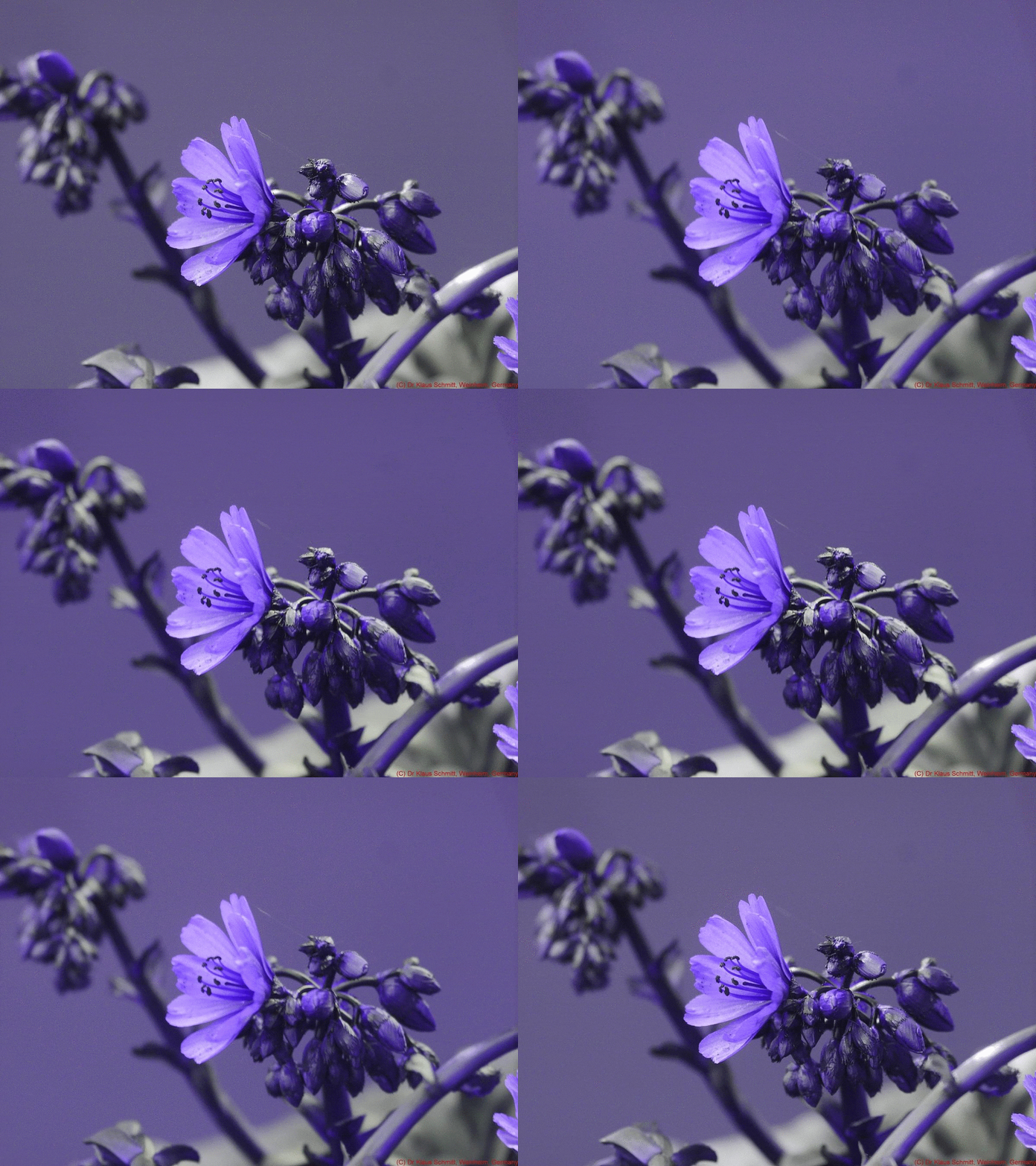
Well I did (cross-)polarizing in ultraviolett (UV) light too. Bit tricky as it needs special polarizers, hard to find and expensive...
https://photographyoftheinvisibleworld.blogspot.com/2020/03/reflected-uv-photography-in-polarized.html
and
https://photographyoftheinvisibleworld.blogspot.com/2020/03/reflected-uv-photography-in-polarized_29.html
Quite interesting how light changes due to polarization...

_________________
Klaus - Admin
"S'il vient a point, me souviendra" [Thomas Bohier (1460-1523)]
http://www.macrolenses.de for macro and special lens info
http://www.pbase.com/kds315/uv_photos for UV Images and lens/filter info
https://www.flickr.com/photos/kds315/albums my albums using various lenses
http://photographyoftheinvisibleworld.blogspot.com/ my UV BLOG
http://www.travelmeetsfood.com/blog Food + Travel BLOG
https://galeriafotografia.com Architecture + Drone photography
Currently most FAV lens(es):
X80QF f3.2/80mm
Hypergon f11/26mm
ELCAN UV f5.6/52mm
Zeiss UV-Planar f4/60mm
Zeiss UV-Planar f2/62mm
Lomo Уфар-12 f2.5/41mm
Lomo Зуфар-2 f4.0/350mm
Lomo ZIKAR-1A f1.2/100mm
Nikon UV Nikkor f4.5/105mm
Zeiss UV-Sonnar f4.3/105mm
CERCO UV-VIS-NIR f1.8/45mm
CERCO UV-VIS-NIR f4.1/94mm
CERCO UV-VIS-NIR f2.8/100mm
Steinheil Quarzobjektiv f1.8/50mm
Pentax Quartz Takumar f3.5/85mm
Carl Zeiss Jena UV-Objektiv f4/60mm
NYE OPTICAL Lyman-Alpha II f1.1/90mm
NYE OPTICAL Lyman-Alpha I f2.8/200mm
COASTAL OPTICS f4/60mm UV-VIS-IR Apo
COASTAL OPTICS f4.5/105mm UV-Micro-Apo
Pentax Ultra-Achromatic Takumar f4.5/85mm
Pentax Ultra-Achromatic Takumar f5.6/300mm
Rodenstock UV-Rodagon f5.6/60mm + 105mm + 150mm
|
|
| Vissza az elejére |
|
|
philslizzy

Csatlakozott: 2012.08.07. Kedd 15:45
Hozzászólások: 4753
Tartózkodási hely: Cheshire, England
|
Elküldve: Vas. Júl. 24, 2022 5:13 pm Hozzászólás témája: |
|
Elküldve: Vas. Júl. 24, 2022 5:13 pm Hozzászólás témája: |
|
|
philslizzy wrote:
I buy older filters, like the Hoya or BDB, they're ground optically flat rather than floated like modern ones. A Polarising filter is by necessity a sandwich involving two layers of glass and a sheet or polarising material. That will degrade image a little, compared to a plain glass filter.
The polarising effect is different between a circular or linear. I use linear because it has a stronger effect overall when using it to eliminate reflections. Circulars are best for increasing contrast and saturating colours better. Two different beasts for two different jobs.
_________________
Hero in the 'messin-with-cameras-for-the-hell-of-it department'. Official. |
|
| Vissza az elejére |
|
|
kypfer
Csatlakozott: 2017.09.27. Szerda 22:39
Hozzászólások: 616
Tartózkodási hely: Jersey C.I.
|
Elküldve: Hétf. Júl. 25, 2022 1:22 pm Hozzászólás témája: |
|
Elküldve: Hétf. Júl. 25, 2022 1:22 pm Hozzászólás témája: |
|
|
kypfer wrote:
| philslizzy írta: |
| The polarising effect is different between a circular or linear. I use linear because it has a stronger effect overall when using it to eliminate reflections. Circulars are best for increasing contrast and saturating colours better. Two different beasts for two different jobs. |
Interesting … thank you
I'd not noticed the difference, but I've not done a direct comparison … I'll play next time I'm out |
|
| Vissza az elejére |
|
|
RokkorDoctor
Csatlakozott: 2021.11.27. Szombat 15:19
Hozzászólások: 1562
Tartózkodási hely: Kent, UK
Expire: 2025-05-01
|
Elküldve: Kedd. Júl. 26, 2022 7:35 am Hozzászólás témája: |
|
Elküldve: Kedd. Júl. 26, 2022 7:35 am Hozzászólás témája: |
|
|
RokkorDoctor wrote:
| philslizzy írta: |
I buy older filters, like the Hoya or BDB, they're ground optically flat rather than floated like modern ones. A Polarising filter is by necessity a sandwich involving two layers of glass and a sheet or polarising material. That will degrade image a little, compared to a plain glass filter.
The polarising effect is different between a circular or linear. I use linear because it has a stronger effect overall when using it to eliminate reflections. Circulars are best for increasing contrast and saturating colours better. Two different beasts for two different jobs. |
Did you observe this using top-quality filters as well?
Reason I am asking is that I have not noticed this difference, and based on how circular PL (CPL) filters are constructed vs. Linear PL (LPL) filters, there is no theoretical reason why linear ones should give better elimination of reflections. Circular PL filter = linear PL filter + quarter wavelength plate (QWP), i.e. a LPL + QWP filter sandwich. The QWP is not going to re-introduce any reflections that were reduced or eliminated by the polarizing filter. The QWP simply turns the linear or elliptical polarized light that comes out of the LPL filter back into circular or elliptical polarized light (effectiveness of that is depending on wavelength) in order for the AF systems of SLR's not to get messed up, but it doesn't re-introduce any reflections.
The only reason I can think of why you might see this difference is if they use a poorer LPL filter in the LPL/QWP sandwich in the circular polariser, but that would simply indicate a cheaper circular PL filter.
_________________
Mark
SONY A7S, A7RII + dust-sealed modded Novoflex/Fotodiox/Rayqual MD-NEX adapters
Minolta SR-1, SRT-101/303, XD7/XD11, XGM, X700
Bronica SQAi
Ricoh GX100
Minolta majority of all Rokkor SR/AR/MC/MD models made
Sigma 14mm/3.5 for SR mount
Tamron SP 60B 300mm/2.8 (Adaptall)
Samyang T-S 24mm/3.5 (Nikon mount, DIY converted to SR mount)
Schneider-Kreuznach PC-Super-Angulon 28mm/2.8 (SR mount)
Bronica PS 35/40/50/65/80/110/135/150/180/200/250mm |
|
| Vissza az elejére |
|
|
DConvert
Csatlakozott: 2010.06.12. Szombat 21:44
Hozzászólások: 984
Tartózkodási hely: Essex UK
|
Elküldve: Kedd. Júl. 26, 2022 12:54 pm Hozzászólás témája: |
|
Elküldve: Kedd. Júl. 26, 2022 12:54 pm Hozzászólás témája: |
|
|
DConvert wrote:
| RokkorDoctor írta: |
| philslizzy írta: |
I buy older filters, like the Hoya or BDB, they're ground optically flat rather than floated like modern ones. A Polarising filter is by necessity a sandwich involving two layers of glass and a sheet or polarising material. That will degrade image a little, compared to a plain glass filter.
The polarising effect is different between a circular or linear. I use linear because it has a stronger effect overall when using it to eliminate reflections. Circulars are best for increasing contrast and saturating colours better. Two different beasts for two different jobs. |
Did you observe this using top-quality filters as well?
Reason I am asking is that I have not noticed this difference, and based on how circular PL (CPL) filters are constructed vs. Linear PL (LPL) filters, there is no theoretical reason why linear ones should give better elimination of reflections. Circular PL filter = linear PL filter + quarter wavelength plate (QWP), i.e. a LPL + QWP filter sandwich. The QWP is not going to re-introduce any reflections that were reduced or eliminated by the polarizing filter. The QWP simply turns the linear or elliptical polarized light that comes out of the LPL filter back into circular or elliptical polarized light (effectiveness of that is depending on wavelength) in order for the AF systems of SLR's not to get messed up, but it doesn't re-introduce any reflections.
The only reason I can think of why you might see this difference is if they use a poorer LPL filter in the LPL/QWP sandwich in the circular polariser, but that would simply indicate a cheaper circular PL filter. |
My thinking on the theoretical differences followed the same lines but I was assuming the difference seen was down to high transmission & high extinction types of polariser. either way the effect of the polariser portion should be the same for reflections & colour saturation (boosted by reducing reflections) The more effective contrast/saturation sounds to me like it's from better coatings, which probably does corelate with more expensive filters.
Most if not all of my polarisers (linear & Circular I have nearly 30 in total) manage near total polarisation so are extremely effective for reflections. I don't think I have any of the high transmission type as mine tend to predate their ready availability. |
|
| Vissza az elejére |
|
|
philslizzy
Csatlakozott: 2012.08.07. Kedd 15:45
Hozzászólások: 4753
Tartózkodási hely: Cheshire, England
|
Elküldve: Kedd. Júl. 26, 2022 4:03 pm Hozzászólás témája: |
|
Elküldve: Kedd. Júl. 26, 2022 4:03 pm Hozzászólás témája: |
|
|
philslizzy wrote:
| RokkorDoctor írta: |
| philslizzy írta: |
I buy older filters, like the Hoya or BDB, they're ground optically flat rather than floated like modern ones. A Polarising filter is by necessity a sandwich involving two layers of glass and a sheet or polarising material. That will degrade image a little, compared to a plain glass filter.
The polarising effect is different between a circular or linear. I use linear because it has a stronger effect overall when using it to eliminate reflections. Circulars are best for increasing contrast and saturating colours better. Two different beasts for two different jobs. |
Did you observe this using top-quality filters as well?
Reason I am asking is that I have not noticed this difference, and based on how circular PL (CPL) filters are constructed vs. Linear PL (LPL) filters, there is no theoretical reason why linear ones should give better elimination of reflections. Circular PL filter = linear PL filter + quarter wavelength plate (QWP), i.e. a LPL + QWP filter sandwich. The QWP is not going to re-introduce any reflections that were reduced or eliminated by the polarizing filter. The QWP simply turns the linear or elliptical polarized light that comes out of the LPL filter back into circular or elliptical polarized light (effectiveness of that is depending on wavelength) in order for the AF systems of SLR's not to get messed up, but it doesn't re-introduce any reflections.
The only reason I can think of why you might see this difference is if they use a poorer LPL filter in the LPL/QWP sandwich in the circular polariser, but that would simply indicate a cheaper circular PL filter. |
I havent used the latest $100 filters I admit. Reflections on water or glass tend to be mostly linear thats why a properly positioned LPL filter is best. Circular polarisers are an invention of necessity, to stop their use interfering with certain metering systems. I believe theres a compromise with CPL
_________________
Hero in the 'messin-with-cameras-for-the-hell-of-it department'. Official. |
|
| Vissza az elejére |
|
|
RokkorDoctor
Csatlakozott: 2021.11.27. Szombat 15:19
Hozzászólások: 1562
Tartózkodási hely: Kent, UK
Expire: 2025-05-01
|
Elküldve: Kedd. Júl. 26, 2022 5:08 pm Hozzászólás témája: |
|
Elküldve: Kedd. Júl. 26, 2022 5:08 pm Hozzászólás témája: |
|
|
RokkorDoctor wrote:
| philslizzy írta: |
| I havent used the latest $100 filters I admit. Reflections on water or glass tend to be mostly linear thats why a properly positioned LPL filter is best. Circular polarisers are an invention of necessity, to stop their use interfering with certain metering systems. I believe theres a compromise with CPL |
The physics doesn't quite work like that
The linear polarization of the light reflecting from water or glass is not blocked better by a linear PL filter. The type of polarization of the light and the type of polarising filter (LPL, CPL) do not need to be "matched" for better effectiveness.
As I mentioned, a "circular polarisation filter" as such doesn't really exist. What is colloquially referred to as a "circular polarisation filter" is actually a conventional linear polarization filter, sandwiched together with a quarter wavelength plate behind it. With a LPL and CPL filter the "filtering" aspect of the polarized light is done by the exact same linear polarising filter, held in the same orientation for an identical effect. In the CPL filter, the filtered light is then additionally passed through the QWP to turn it back into circular polarised light.
You are correct in that the CPL filter is a compromise in that the QWP used for conversion of the polarised light back into circular polarized light is designed for an optimum wavelength. For the optimum wavelenth (probably green light, but not sure), the polarization of the light is turned from linear to circular, for other wavelengths you will get elliptical polarized light. If you were to place another polarizer filter behind the CPL, you would probably notice localised color shifts as you rotate the second polarizer filter.
Polarized light is interesting to play with; if the physics behind it isn't well understood, the resulting effects can be very surprising to the user. Mounting optically transparent plastics under mechanical stress between two cross-polarized LPL filters is one such example, which reveals the major lines of stress and tension in brightly colored patterns
_________________
Mark
SONY A7S, A7RII + dust-sealed modded Novoflex/Fotodiox/Rayqual MD-NEX adapters
Minolta SR-1, SRT-101/303, XD7/XD11, XGM, X700
Bronica SQAi
Ricoh GX100
Minolta majority of all Rokkor SR/AR/MC/MD models made
Sigma 14mm/3.5 for SR mount
Tamron SP 60B 300mm/2.8 (Adaptall)
Samyang T-S 24mm/3.5 (Nikon mount, DIY converted to SR mount)
Schneider-Kreuznach PC-Super-Angulon 28mm/2.8 (SR mount)
Bronica PS 35/40/50/65/80/110/135/150/180/200/250mm |
|
| Vissza az elejére |
|
|
DConvert
Csatlakozott: 2010.06.12. Szombat 21:44
Hozzászólások: 984
Tartózkodási hely: Essex UK
|
Elküldve: Kedd. Júl. 26, 2022 9:38 pm Hozzászólás témája: |
|
Elküldve: Kedd. Júl. 26, 2022 9:38 pm Hozzászólás témája: |
|
|
DConvert wrote:
| RokkorDoctor írta: |
You are correct in that the CPL filter is a compromise in that the QWP used for conversion of the polarised light back into circular polarized light is designed for an optimum wavelength. For the optimum wavelenth (probably green light, but not sure), the polarization of the light is turned from linear to circular, for other wavelengths you will get elliptical polarized light. If you were to place another polarizer filter behind the CPL, you would probably notice localised color shifts as you rotate the second polarizer filter.
Polarized light is interesting to play with; if the physics behind it isn't well understood, the resulting effects can be very surprising to the user. Mounting optically transparent plastics under mechanical stress between two cross-polarized LPL filters is one such example, which reveals the major lines of stress and tension in brightly colored patterns |
That helps explain some of the crazy colours I've seen when playing with 2 CPLs back to back. Colour shifts galore!
Viewing stressed plastics is one of my favorite experiments with polarisers, using an LCD screen as the light source tends to make it particularly effective - This gives you a polarised light source so you only need one more polariser |
|
| Vissza az elejére |
|
|
RokkorDoctor
Csatlakozott: 2021.11.27. Szombat 15:19
Hozzászólások: 1562
Tartózkodási hely: Kent, UK
Expire: 2025-05-01
|
Elküldve: Szer. Júl. 27, 2022 7:02 am Hozzászólás témája: |
|
Elküldve: Szer. Júl. 27, 2022 7:02 am Hozzászólás témája: |
|
|
RokkorDoctor wrote:
| DConvert írta: |
| Viewing stressed plastics is one of my favorite experiments with polarisers, using an LCD screen as the light source tends to make it particularly effective - This gives you a polarised light source so you only need one more polariser |
Same here
I find that clear polystyrene is one of the best candidates. E.g. the clear jewel cases of CDs. Cheap polystyrene injection mouldings are almost never annealed after the moulding process, which means all sorts of internal stresses remain. Gorgeous!
_________________
Mark
SONY A7S, A7RII + dust-sealed modded Novoflex/Fotodiox/Rayqual MD-NEX adapters
Minolta SR-1, SRT-101/303, XD7/XD11, XGM, X700
Bronica SQAi
Ricoh GX100
Minolta majority of all Rokkor SR/AR/MC/MD models made
Sigma 14mm/3.5 for SR mount
Tamron SP 60B 300mm/2.8 (Adaptall)
Samyang T-S 24mm/3.5 (Nikon mount, DIY converted to SR mount)
Schneider-Kreuznach PC-Super-Angulon 28mm/2.8 (SR mount)
Bronica PS 35/40/50/65/80/110/135/150/180/200/250mm |
|
| Vissza az elejére |
|
|
NiceDays
Csatlakozott: 2021.06.25. Péntek 18:10
Hozzászólások: 100
|
Elküldve: Pént. Szept. 16, 2022 5:59 am Hozzászólás témája: |
|
Elküldve: Pént. Szept. 16, 2022 5:59 am Hozzászólás témája: |
|
|
NiceDays wrote:
| philslizzy írta: |
I buy older filters, like the Hoya or BDB, they're ground optically flat rather than floated like modern ones. A Polarising filter is by necessity a sandwich involving two layers of glass and a sheet or polarising material. That will degrade image a little, compared to a plain glass filter.
The polarising effect is different between a circular or linear. I use linear because it has a stronger effect overall when using it to eliminate reflections. Circulars are best for increasing contrast and saturating colours better. Two different beasts for two different jobs. |
 |
|
| Vissza az elejére |
|
|
philslizzy
Csatlakozott: 2012.08.07. Kedd 15:45
Hozzászólások: 4753
Tartózkodási hely: Cheshire, England
|
Elküldve: Vas. Szept. 18, 2022 10:47 pm Hozzászólás témája: |
|
Elküldve: Vas. Szept. 18, 2022 10:47 pm Hozzászólás témája: |
|
|
philslizzy wrote:
[quote="RokkorDoctor"]
| philslizzy írta: |
Did you observe this using top-quality filters as well?
|
I've never used expensive, modern filters
_________________
Hero in the 'messin-with-cameras-for-the-hell-of-it department'. Official. |
|
| Vissza az elejére |
|
|
SkedAddled

Csatlakozott: 2008.10.19. Vasárnap 1:05
Hozzászólások: 1447
Tartózkodási hely: Michigan, USA
Expire: 2021-08-12
|
Elküldve: Hétf. Szept. 19, 2022 5:03 am Hozzászólás témája: |
|
Elküldve: Hétf. Szept. 19, 2022 5:03 am Hozzászólás témája: |
|
|
SkedAddled wrote:
A CPL keeps the glare and reflections out of your images, when done conscientiously.
Otherwise, it's a mess to PhotoShop for.
_________________
Craig
Of course I'm all right! Why? What have you heard!?
Canon Digital EOS 5D Mk IV, EOS 50D, Powershot S3 iS
Vivitar 28 f/2.8 OM - Zuiko 50 f/1.8 OM - Tamron SP 28-80 f/3.5 AD2[Favorite!] - Hanimar 135 f/3.5 M42 - Soligor 135 f/2.8 T4 - Tamron SP 60-300 f/3.8 AD2 - Soligor 75-260 f/4.5 M42 - Soligor 400 f/6.3 T4 - Soligor 500 f/8 T2 Cat + Matched 2X TC - Addiction Growing!
This is us -- We drive these -- We're named these |
|
| Vissza az elejére |
|
|
|
|
 Magyar
 Español
 中文
 Русский
 Deutsch
 日本語
 Français


